
African medicinal plant offers breakthrough in fight against sickle cell disease
November 6, 2026 · by CEO Rafamall
Cissus populnea is a traditional West African plant, known in Ghana and Nigeria as Okoho, Ogbolo, or Dafaaraa. Researchers from the University of Ibadan in Nigeria have developed effervescent granules from its roots. This modernized formulation shows potential for supporting sickle cell anaemia management.
Cissus populnea have been widely utilised across Nigeria, Ghana, and neighbouring countries as natural remedies for SCA management; raw crude extracts present severe pharmaceutical drawbacks.
Scientists may have found a safer, more reliable way to use a traditional plant remedy to help people living with Sickle Cell Anaemia.
A team of researchers from the University of Ibadan took the roots of Cissus populnea, a traditional West African plant long used for blood conditions, and transformed them into easy-to-drink fizzy (effervescent) powders.
By converting the crude ethanol extract of Cissus populnea roots into effervescent granules, the research team successfully demonstrates how traditional African medicine can be successfully modernized into a standardized, highly effective, and consumer-friendly oral drug formulation.
Published in the West African Journal of Pharmacy, the researchers resolved major manufacturing limitations while boosting the extract’s biological ability to prevent and reverse the sickling of human red blood cells.
“Cissus populnea effervescent granules showed better flow and antisickling properties than those of the crude extract, and may play important roles in the management of sickle cell anaemia,” they said.
Sickle cell disease, also called sickle cell anemia, is a group of inherited disorders that affect hemoglobin, the major protein that carries oxygen in red blood cells.
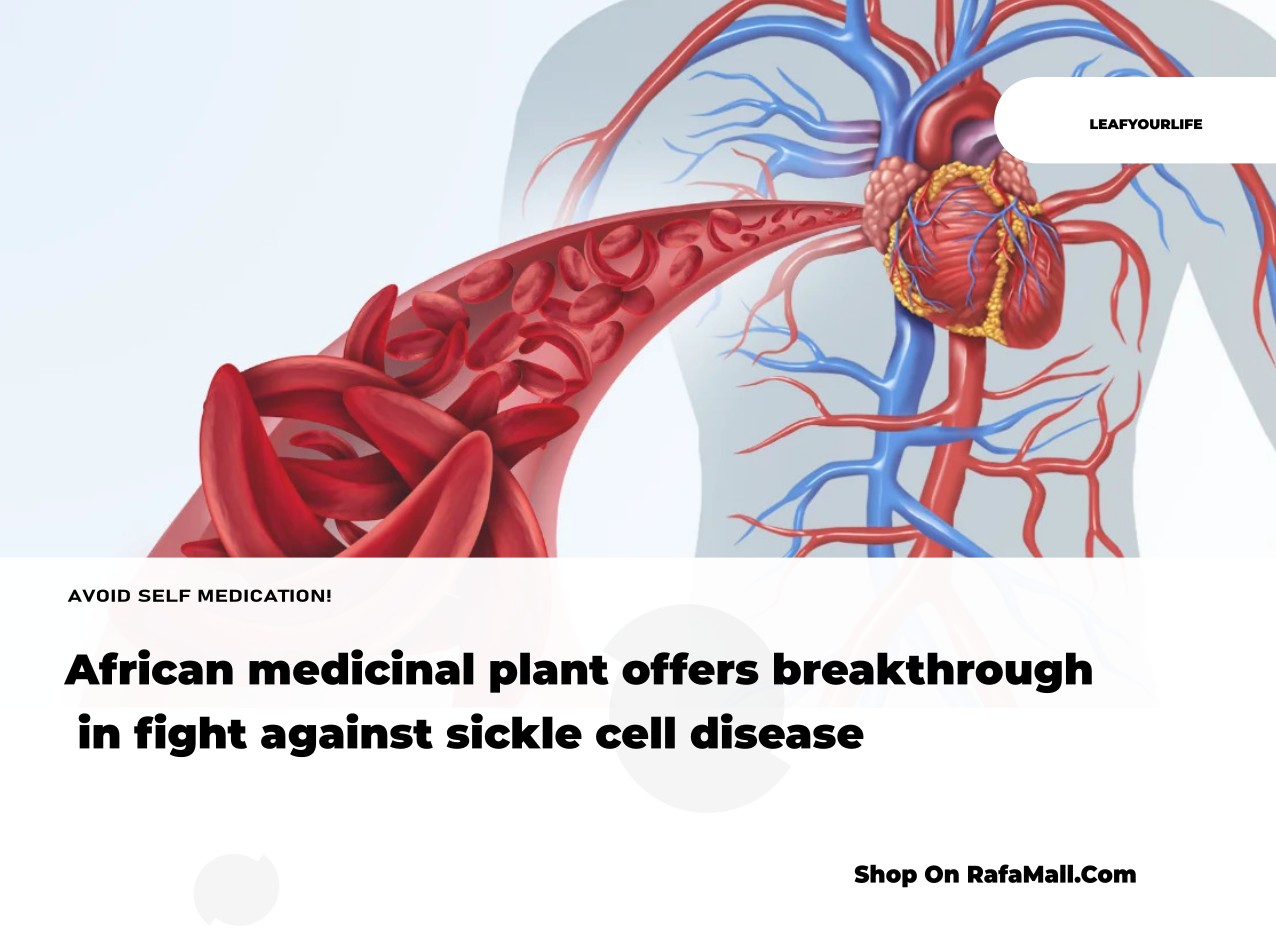
Normally, red blood cells are disc-shaped and flexible so they can move easily through the blood vessels. In sickle cell disease, red blood cells are misshaped, typically crescent- or “sickle”-shaped due to a gene mutation that affects the hemoglobin molecule.
When red blood cells sickle, they do not bend or move easily and can block blood flow to the rest of the body.
Serious problems may come from having sickle cell disease, including sudden onset of strong episodes of pain, called pain crises. People who have sickle cell disease may also experience other serious health complications, such as chronic pain, stroke, lung problems, eye problems, infections, and kidney disease.
Sickle cell disease is a lifelong illness that may be managed through preventive screening and treatment strategies. Treatment reduces or helps manage symptoms and increase longevity. With the right care, many people who have sickle cell disease live fulfilling lives and safely participate in most activities.
Cissus populnea have been widely utilised across Nigeria, Ghana, and neighbouring countries as natural remedies for SCA management; raw crude extracts present severe pharmaceutical drawbacks.
Its unprocessed botanical extracts lack standardised dosing, exhibit poor powder flowability during mass production, decompose quickly, and often suffer from low patient acceptance due to unpalatable taste or gastrointestinal irritation.
Known as Okoho (Igbo), Ogbolo or Ajara (Yoruba), and Dafaaraa or Latutuwa (Hausa), Cissus populnea’s stem is heavily utilised in Northern and Middle Belt Nigeria (especially among the Idoma people) as a natural food thickener for local soups.
It is also frequently used in traditional herbal medicine to manage male infertility, treat erectile dysfunction, venereal diseases, skin wounds, urinary tract infections, and digestive ailments as well as for managing sickle cell disease symptoms and supporting metabolic health.
To produce the consumer-friendly oral drug formulation, the researchers led by Temitayo O. Ajayi, Oladapo A. Adetunji, and Jones O. Moody from the University of Ibadan’s Faculty of Pharmacy harvested fresh Cissus populnea roots, dried and pulverised them before preparing their extract with ethanol.
Using a wet granulation method, the scientists produced three distinct effervescent granule formulations alongside a baseline control of crude extract alone. The effervescent granules were formulated and made to undergo rigorous physical testing for powder flowability during industrial capsule filling or sachet packaging.
The team also tested the formulations using blood samples collected from confirmed HbSS sickle cell patients attending routine clinics at the University College Hospital (UCH), Ibadan.
In lab tests on affected human blood cells, the new plant mixture prevented up to 72% of red blood cells from bending into the abnormal “sickle” shape. It also managed to reverse sickling in 57% of cells that had already changed shape.
The new herbal powder performed just as well as, and in some tests better than, standard chemical treatments used to treat the condition.
The researchers explained that the successful development of Cissus populnea effervescent granules holds widespread implications for public health, clinical pharmacy, and African medical sovereignty.
Raw herbal decoctions suffer from variable potencies depending on weather, harvesting season, and preparation methods. Standardised effervescent granules guarantee that every batch delivers a uniform, predictable therapeutic concentration of active phytochemicals.
Effervescent granules offer key clinical advantages: when dissolved in water, the pre-dissolved liquid state allows rapid absorption into the bloodstream during sudden painful crises, while masking the bitter taste of raw herbs to improve compliance among children and elderly individuals who struggle with swallowing whole tablets or capsules.
By bridging traditional ethnobotanical knowledge with modern drug design, the Ibadan team has laid a rigorous scientific foundation for clinical trials—bringing an affordable, locally sourced treatment one step closer to the patients who need it most.
Frequently asked questions
What is Cissus populnea?
Cissus populnea is a traditional West African plant, also known as Okoho (Igbo), Ogbolo or Ajara (Yoruba), and Dafaaraa or Latutuwa (Hausa). It is used in herbal medicine and as a food thickener.
How is Cissus populnea traditionally used in Ghana and Nigeria?
It is widely utilized across Nigeria, Ghana, and neighboring countries as a natural remedy for managing sickle cell anaemia symptoms and supporting metabolic health.
What is the new research on Cissus populnea about?
Scientists from the University of Ibadan have transformed Cissus populnea roots into easy-to-drink effervescent powders. This aims to modernize its use for improved delivery and anti-sickling properties.
What are the benefits of the new Cissus populnea formulation?
The effervescent granules show better flow and anti-sickling properties compared to crude extracts, resolving manufacturing limitations and potentially improving patient acceptance.
More from the journal
Traditional medicine practitioners urge investment in herbal researchTraditional medicine practitioners have called for increased government investment in herbal medicine research and …Traditional healers should use research and new ideas to improve healthcare.
The CEO of Fafalidem Herbal Center at Dzodze in the Volta Region, Samuel Kofi …Natural plant compound may help overcome cancer drug resistance
A natural plant compound may help overcome a built-in defense that allows many cancers …