
Brisker walking tied to longer life
October 28, 2026 · by CEO Rafamall
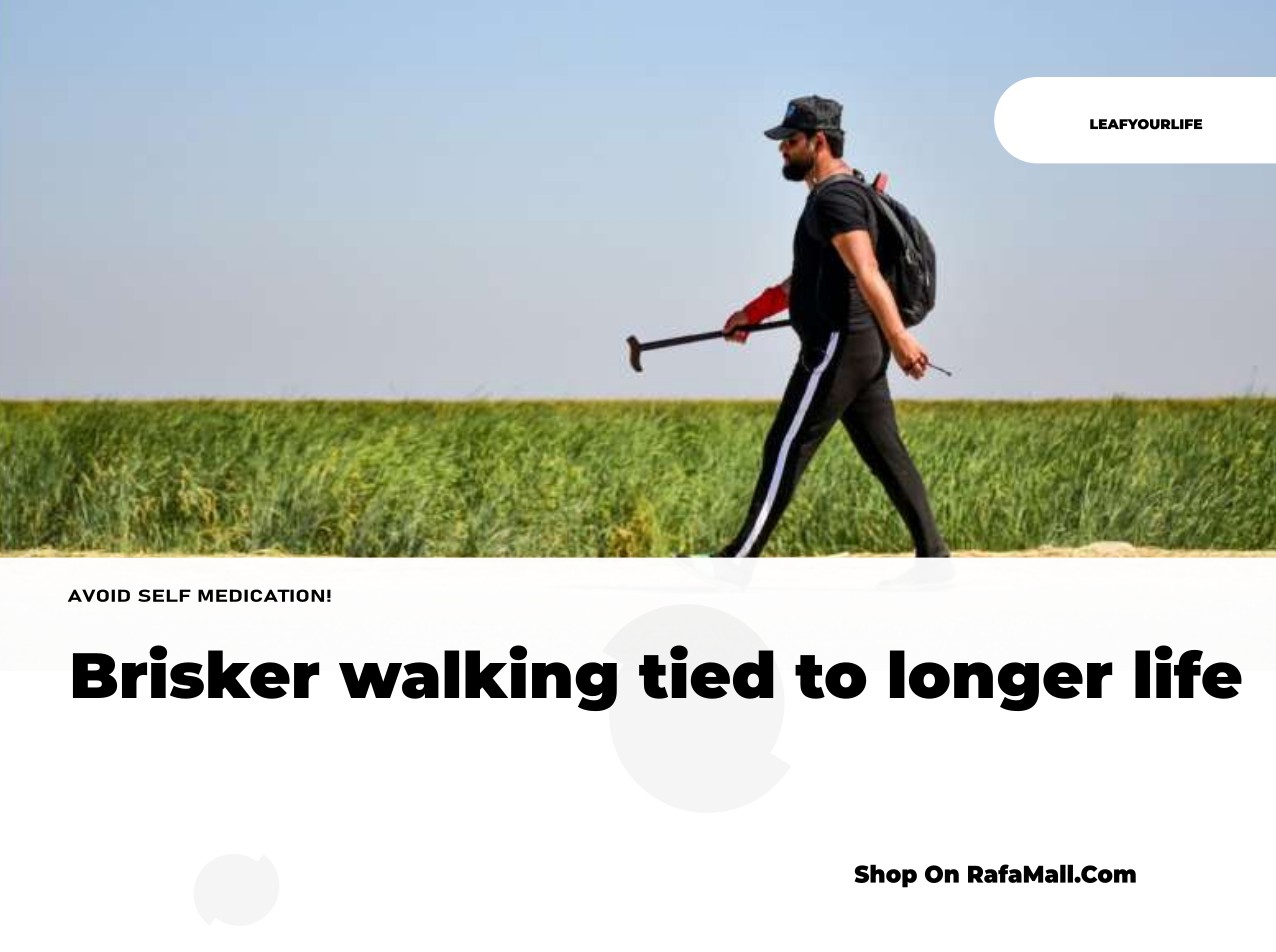
In a new study, folks who walked at a brisker pace had a lower risk of an early death. Faster walking speed and more steps per minute are both associated with a lower risk of dying from any cause, researchers report in JAMA Network Open.Walking speed and step rate were "consisten
Walking at a brisker pace suggests that you're living "with fewer chronic diseases and that whatever diseases you may have are more well managed," Strange said in a Northwell news release.
In a new study, folks who walked at a brisker pace had a lower risk of an early death. Faster walking speed and more steps per minute are both associated with a lower risk of dying from any cause, researchers report in JAMA Network Open.
Walking speed and step rate were "consistently associated with all-cause mortality, even after adjustment for daily step count," the researchers wrote. The study was led by Rayane Haddadj, a fellow in public health and nursing at the Norwegian University of Science and Technology in Trondheim.
For the new study, researchers analyzed data for more than 4,000 British civil servants who are participating in a health research project established in the late 1980s. They averaged about 69 years of age at the time the study was done.
Participants had undergone clinical examinations every four to five years. In 2012 and 2013, they also had their walking speed measured and wore a device to track their steps per minute as they strolled.
The study linked higher walking speeds to a 23% lower risk of death over the study period. A snappier step rate was tied to a 17% lower risk of death, the researchers said.
There are a lot of reasons why faster walking might be linked to longer life, said Dr. Theodore Strange, chair of medicine at Northwell Staten Island University Hospital in New York.
Walking at a brisker pace suggests that you're living "with fewer chronic diseases and that whatever diseases you may have are more well managed," Strange said in a Northwell news release.
However, when health declines, "walking speed may be one of the first functional measures to decline with that," he explained. "A faster clinical gait speed is probably associated with better health. And as you lose that, you probably have an increased risk for falling, frailty, decreased cognitive decline, and ultimately, increased morbidity and mortality."
People who want to pick up the pace while walking should start at a speed that's comfortable to them, Strange advised, and then gradually increase their steps per minute over time.
"Probably shorter steps are safer than longer steps in terms of tripping hazards and so on," he added.
Pay attention to your posture—standing tall, shoulders back, relaxed and moving your arms as you walk, Strange said.
You don't necessarily need to get the 10,000 daily steps that everyone mentions as a goal, he added.
"My advice would be to start where you are and track your current steps for a few days. Get them up to that 5,000 to 6,000 range and then try to get to 7,000, 8,000 a day," Strange said. "If you have the time, the ability and the wherewithal to get to 10,000, I think that's great. But I think the 7,000, 8,000 range is right where you want to be."
medicalxpress.com
Frequently asked questions
What is the main finding of the study on walking?
The study found that brisk walking and a faster step rate are associated with a lower risk of early death from any cause.
How much faster should I walk to see benefits?
It's advised to start at a comfortable speed and gradually increase your steps per minute over time, focusing on shorter, safer steps.
Is 10,000 steps a day necessary for health benefits?
While 10,000 steps is beneficial, the study suggests that aiming for 7,000 to 8,000 steps a day is a good target for significant health benefits.
What are the health benefits associated with faster walking?
Faster walking is linked to fewer chronic diseases, better managed existing conditions, and a lower risk of falls, frailty, and cognitive decline.
What posture should I maintain while walking for better health?
Maintain good posture by standing tall with shoulders back, relaxed, and moving your arms as you walk.
More from the journal
Plastic tea bags release BPA, plasticizers, and up to 2,500 microplastic particles into your teaMore research is needed to fully examine risks and which precautions may be truly …GHS Director-General assesses emergency preparedness in Savannah Region
The Director-General of the Ghana Health Service (GHS), Dr Samuel Kaba Akoriyea, has assessed …10 foods that can help support a healthy gut
Although no single food can guarantee good gut health, regularly eating a variety of …