
Herbal Medicine Market to reach USD 540.90 Billion by 2035 at 9.1% CAGR
August 21, 2026 · by CEO Rafamall
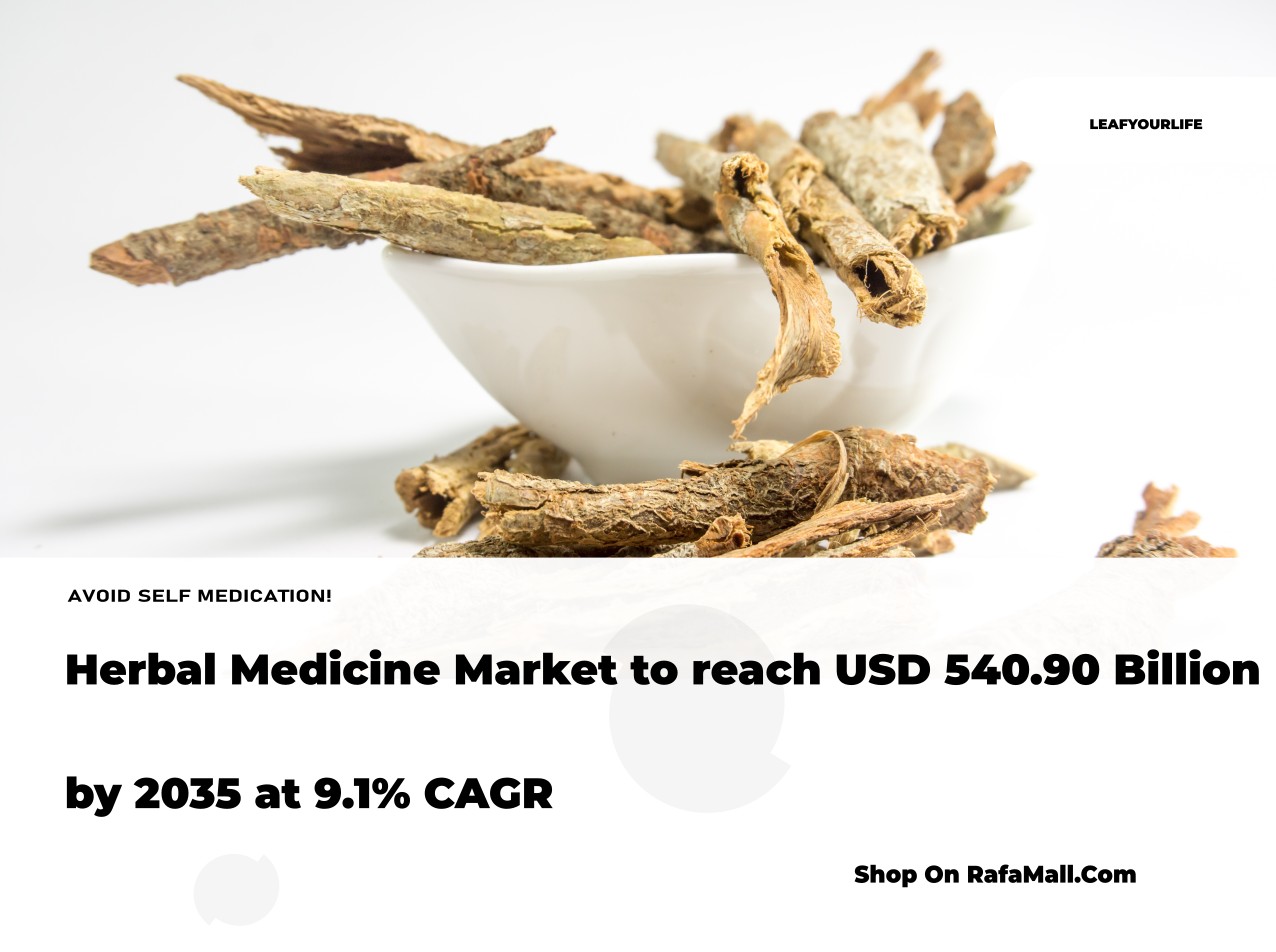
The global herbal medicine market is projected to reach USD 540.90 Billion by 2035, growing from USD 246.90 Billion in 2026 at a 9.1% CAGR. This growth is driven by consumer preference for natural wellness, regulatory modernization, and technological advancements like AI-enabled phytochemical discovery.
As per Market Research Future, the global Herbal Medicine Market size is projected to reach USD 540.90 Billion by 2035 from USD 246.90 Billion in 2026, at a CAGR of 9.1% during the forecast period 2026–2035. The market base was estimated at USD 226.30 Billion in 2025.
Herbal Medicine Market to Surge from USD 246.90 Billion in 2026 to USD 540.90 Billion by 2035—By Natural Wellness Consumer Shift, Regulatory Modernization
/EINPresswire.com/ -- As per Market Research Future, the global Herbal Medicine Market size is projected to reach USD 540.90 Billion by 2035 from USD 246.90 Billion in 2026, at a CAGR of 9.1% during the forecast period 2026–2035. The market base was estimated at USD 226.30 Billion in 2025.The 9.1% CAGR—anchored by structural shifts in consumer behavior and technological innovation—is propelled by three converging forces: a visible global shift toward preventative healthcare and natural chronic-disease management, with the WHO estimating that 80% of the world’s population has used some form of herbal cure; regulatory modernization across the United States, European Union, and China that has shortened approval timelines for standardized herbal products, including the EMA’s expansion of its Community Herbal Monograph registry by 24 new botanicals between 2023 and 2025; and the technology-led transformation of legacy supply chains through AI-enabled phytochemical screening, precision fermentation, and blockchain-backed traceability.
Consumer Preference for Natural Wellness
A global shift towards preventative healthcare is expanding the addressable consumer base of the Herbal Medicine Market. Out-of-pocket spending on plant-based health products has exceeded USD 95 billion yearly across emerging economies. According to research from Euromonitor, Millennials and Gen-Z in North America and Europe are purchasing natural products 38% greater than the previous generation. This driver contributes an estimated ~22% of the overall CAGR impact.
Regulatory Pathway Modernization
The European Medicines Agency expanded its Community Herbal Monograph list by 24 new botanicals between 2023 and 2025, enabling abbreviated registration for products meeting predefined safety and efficacy thresholds. In the United States, the FDA’s Botanical Drug Development guidance was updated in 2024. China’s National Medical Products Administration introduced a fast-track classification for classical formulas. This regulatory tailwind contributes an estimated ~18% of the overall CAGR impact.
AI-Enabled Phytochemical Discovery
Machine-learning models trained on ethnobotanical databases are compressing lead-compound identification from years to months. Recursion Pharmaceuticals and Evotec have collectively analyzed over 400,000 plant metabolites by mid-2025. Generative-chemistry models are already screening databases containing over 500,000 compounds, identifying synergistic multi-herb combinations that would take decades to evaluate through conventional assays. This driver contributes an estimated ~15% of the overall CAGR impact.
E-Commerce and Direct-to-Consumer Expansion
The global Herbal Medicine Market income from online retail channels has risen to 19%, up from 11% in 2020. Platforms like Amazon Pharmacy, iHerb, 1mg (India), and Tmall Health (China) have democratized access to standardized herbal products. Subscription-based supplement services grew 27% year-over-year across North America in 2024, indicating sticky consumer engagement. E-commerce channels are advancing at a 10.8% CAGR, the fastest among distribution channels.
Ask for Customization:
https://www.marketresearchfuture.com/ask_for_customize/3250
Market Segment Insights
BY PRODUCT TYPE
Herbal Pharmaceuticals: Dominant segment with 28.3% revenue share in 2025, reflecting strong demand for clinically validated plant-derived medicines in hospital settings.
Herbal Dietary Supplements: Fastest-expanding product line at a 10.2% CAGR through 2035, outpacing the overall market as wellness-oriented consumers broaden their supplement routines.
Herbal Beauty & Personal Care: Represents USD 41.80 Billion in 2025, driven by the clean-beauty consumer trend.
Other Herbal Products: Growing at a 7.8% CAGR (2026–2035), fueled by functional food integration.
BY SOURCE
Roots & Rhizomes: Dominant source with 39.8% revenue share in 2025, with turmeric and ginseng together representing the most commercially cultivated medicinal plants globally. India exported over 180,000 metric tons of turmeric in the 2024–2025 trade year.
Leaves: Represents USD 48.70 Billion in 2025, with green tea extract and moringa leading applications.
Flowers: Fastest-growing source at an 8.6% CAGR (2026–2035), driven by chamomile and lavender in wellness products.
Seeds & Fruits: Represents USD 26.30 Billion in 2025, with black seed oil and elderberry popularity.
Bark & Other: Growing at a 7.4% CAGR (2026–2035), driven by willow bark and cinnamon derivatives.
BY FORM
Tablets & Capsules: Largest form segment with 42.5% revenue share in 2025, offering convenience and dose standardization.
Powders & Granules: Represents USD 38.40 Billion in 2025, driven by functional-food and smoothie culture.
Teas & Infusions: Fastest-growing dosage form at an 11.9% CAGR (2026–2035), driven by the global ready-to-drink tea segment.
Liquid Extracts & Tinctures: Growing at a 9.4% CAGR (2026–2035), supported by bioavailability advantages.
Topical Preparations: Represents USD 18.20 Billion in 2025, driven by dermatological and cosmeceutical demand.
BY DISTRIBUTION CHANNEL
Hospital & Retail Pharmacies: Largest channel with 35.9% revenue share in 2025, operating as the premier trust anchor where consumers rely on pharmacist guidance and practitioner-backed recommendations.
E-Commerce: Fastest-growing channel at a 10.8% CAGR (2026–2035), propelled by direct-to-consumer botanical brands, integrated digital health platforms, and consumer preference for convenient doorstep delivery.
Specialty Health Stores: Represents USD 32.60 Billion in 2025, driven by curated product assortments.
Supermarkets & Hypermarkets: Growing at a 7.9% CAGR (2026–2035), driven by mass-market accessibility.
BY MEDICINAL PLANT TYPE
Turmeric: Dominant plant segment with 21.1% revenue share in 2025, supported by substantial peer-reviewed clinical evidence detailing its anti-inflammatory properties and high curcumin bioavailability.
Ginseng: Fastest-growing medicinal plant at an 11.1% CAGR (2026–2035), driven by global consumer adoption of premium adaptogens and functional foods targeting cognitive longevity and fatigue management. South Korea’s ginseng industry recorded USD 2.8 billion in domestic sales.
Aloe Vera: Represents USD 19.40 Billion in 2025, driven by topical and digestive applications.
Echinacea: Growing at a 9.2% CAGR (2026–2035), fueled by immune-support demand cycles.
Ginkgo Biloba: Represents USD 11.80 Billion in 2025, anchored in the cognitive-health supplement category.
Other Medicinal Plants: Growing at an 8.8% CAGR (2026–2035), including ashwagandha, elderberry, and milk thistle.
Read Detailed Insights:
https://www.marketresearchfuture.com/reports/herbal-medicine-market-3250
Regional Outlook
Asia-Pacific — Dominant Market (~48.2% Share, 2025)
China: Holds the largest regional share at 41.3%, fueled by Traditional Chinese Medicine modernization. China’s 14th Five-Year Plan for TCM allocated over USD 3.5 billion to hospital infrastructure and international standardization efforts.
India: Growing at a 10.4% CAGR, driven by AYUSH Ministry digital infrastructure. The Ministry has registered more than 800,000 practitioners on its digital platform.
Japan: Contributes USD 18.60 Billion (2035) through aging demographics and Kampo prescription integration. Tsumura & Co. partnered with the Japanese Ministry of Health to digitize 148 Kampo prescriptions into the national electronic health-record system.
South Korea: Growing at a 9.8% CAGR, driven by K-Beauty botanical crossover and manufacturing cost structures 30–45% below Western incumbents.
ASEAN: Contributes USD 12.40 Billion (2035) through Jamu and traditional formulary systems.
Rest of Asia-Pacific: Growing at an 8.9% CAGR, driven by Australian clinic chain expansion and emerging market formalization.
North America — Second Largest (22.5% Share, 2025)
United States: Generates approximately 78.4% of North American revenue, driven by dietary supplement retail expansion. FDA-regulated dietary supplement sales exceeded USD 21 billion in 2024 alone, with herbal and botanical formulations accounting for roughly 40% of that total.
Canada: Contributes 13.2% of regional share through the Natural Health Products Directorate streamlined licensing framework.
Mexico: Represents 8.4% of regional share through COFEPRIS acceleration of indigenous botanical certification under its 2024 Traditional Medicine Integration Program.
Europe — Fastest-Growing Region (11.5% CAGR, 2026–2035)
Germany: Leads the region with a 12.6% CAGR, anchored by the Schwabe phytopharmaceutical tradition and Commission E clinical monographs. Germany’s phytopharmaceutical sector alone generates over USD 4.1 billion in annual pharmacy sales.
United Kingdom: Contributes USD 7.80 Billion (2035) through post-Brexit herbal licensing regime expansion.
France: Growing at an 11.1% CAGR, driven by pharmacy-channel herbal OTC growth.
Italy: Contributes USD 5.20 Billion (2035) through Mediterranean botanical heritage.
Spain: Growing at a 10.8% CAGR, supported by organic herbal cultivation subsidies.
Nordic Countries: Contributes USD 3.90 Billion (2035) on preventive wellness culture and high disposable income.
Russia: Growing at a 9.6% CAGR, driven by domestic production substitution policies.
Rest of Europe: Contributes USD 4.40 Billion (2035). The EU Medical Device Regulation and Farm to Fork Strategy incentivize organic cultivation of medicinal plants.
South America — Growing Presence (5.5% Share, 2025)
Brazil: Anchors the region at 62.8% of revenue, with ANVISA’s phytotherapeutic registration pathway and the National Policy on Medicinal Plants, which earmarked USD 140 million for 2024–2027 research and cultivation programs.
Argentina: Growing at an 8.5% CAGR, driven by growing pharmacy-channel distribution.
Rest of South America: Contributes USD 2.10 Billion (2035) through Andean botanical biodiversity sourcing.
Middle East & Africa — Emerging Opportunity (8.7% CAGR, 2026–2035)
Saudi Arabia: Leads the region with 28.7% of regional share, driven by Vision 2030 wellness-tourism investment and complementary medicine clusters within NEOM.
UAE: Growing at a 9.3% CAGR, driven by free-zone manufacturing incentives and Dubai medical tourism positioning.
South Africa: Represents USD 1.60 Billion (2035) through African traditional medicine codification and private-sector dermatology networks.
Egypt: Growing at an 8.1% CAGR, driven by medicinal-plant export promotion and cost-competitive clinics.
Rest of MEA: The African Union’s Continental Strategy for Traditional Medicine aims to establish GMP-certified production facilities in 15 member states by 2030.
Competitive Landscape and Recent Developments
The Herbal Medicine Market exhibits low concentration, with the top five companies collectively holding an estimated 18–24% of global revenue. The calculated HHI sits well below 1,000, reflecting a highly fragmented landscape populated by multinational pharmaceutical firms, regional traditional-medicine specialists, and digitally native DTC brands. Competition intensifies around clinical differentiation, supply-chain transparency, and omnichannel distribution reach.
KEY COMPANIES AND RECENT MILESTONES
Dabur India Ltd.: Heritage brand with pan-Asian distribution, holding an estimated ~4–6% revenue share. In August 2024, formally signed an MoU with the Government of Tamil Nadu to invest up to INR 400 crores over five years to build its first state-of-the-art multi-category manufacturing plant in South India.
Himalaya Wellness Company: Clinical-research-led formulation pipeline, holding an estimated ~3–5% revenue share across herbal healthcare, personal care, and baby care.
Dr. Willmar Schwabe Group: European regulatory gold standard, holding an estimated ~3–5% revenue share with phytopharmaceuticals, Umckaloabo, and Ginkgo extracts. In March 2024, announced the strategic acquisition of a two-thirds majority stake in Berlin-based mind-nutrition startup Braineffect, expanding its DTC digital health channels.
Arkopharma Laboratories: French pharmacy-channel leadership, holding an estimated ~2–4% revenue share with phytotherapy capsules and essential oils.
Tsumura & Co.: Japanese hospital formulary integration, holding an estimated ~2–4% revenue share with Kampo prescription medicines. In December 2023, partnered with the Japanese Ministry of Health to digitize 148 Kampo prescriptions into the national electronic health-record system.
Blackmores Limited: Asia-Pacific wellness premium brand, holding an estimated ~2–3% revenue share with herbal supplements and TCM-inspired products.
Nature's Sunshine Products: Multi-level distribution network, holding an estimated ~2–3% revenue share with herbal supplements and essential oils.
Bionorica SE: Evidence-based respiratory and urinary botanicals, holding an estimated ~2–3% revenue share with clinically validated phytopharmaceuticals.
Bayer AG (Consumer Health): Global OTC distribution leverage, holding an estimated ~2–3% revenue share with herbal OTC brands including Iberogast and Canephron.
Herbalife International: Direct-selling global footprint, holding an estimated ~2–3% revenue share with herbal nutrition supplements and weight management.
Recent Industry Developments:
Dabur India Ltd. (August 2024): Formally signed a facilitation Memorandum of Understanding with the Government of Tamil Nadu to invest up to INR 400 crores over five years to build its first state-of-the-art multi-category manufacturing plant in South India.
Schwabe Group (March 2024): Announced the strategic acquisition of a two-thirds majority stake in Berlin-based mind-nutrition startup Braineffect, expanding its direct-to-consumer digital health channels and broadening its natural supplement functional portfolio.
US FDA (December 2016 / Updated 2024): Officially released its final Botanical Drug Development Guidance for Industry, outlining adjusted review protocols that accommodate complex mixtures and pre-existing human use histories typical of botanical formulations.
Tsumura & Co. (December 2023): Partnered with the Japanese Ministry of Health to digitize 148 Kampo prescriptions into the national electronic health-record system, integrating traditional formulations into mainstream clinical workflows.
Future Outlook: 2026–2035
AI-Driven Formulation and Personalization will reshape R&D economics over the next decade. Generative-chemistry models screening ethnobotanical databases containing over 500,000 compounds are identifying synergistic multi-herb combinations that would take decades to evaluate through conventional assays. The intersection of nutrigenomics and the Herbal Medicine Market could unlock premium subscription tiers, with early movers already integrating botanical recommendations into consumer genomics platforms.
Sustainability and Regenerative Supply Chains will become critical as climate volatility endangers wild-harvested species. The 2024 IUCN Red List identified 723 vulnerable medicinal-plant species. Industry coalitions such as the FairWild Foundation have expanded certification schemes. Companies investing in controlled-environment agriculture for high-value botanicals will gain supply resilience and ESG credentials.
Clinical Evidence Generation and Insurance Integration will create the next growth frontier. Germany and Japan already cover selected phytopharmaceuticals and Kampo formulations under national health insurance. Expanding these frameworks to additional European markets and potentially to US Medicare Advantage plans would dramatically enlarge the addressable Herbal Medicine Market.
Platform Economics and Ecosystem Integration will transform commercial models. Digital wellness platforms that combine telemedicine consultations, subscription herbal delivery, wearable biomarker tracking, and community involvement are creating ecosystem lock-in effects. The market will become increasingly defined by SaaS-based recurring-revenue models, with customer lifetime values growing as platforms combine diagnostics, product fulfillment, and outcomes tracking.
Precision Fermentation for High-Value Plant Compounds will reduce agricultural dependency. Microbial fermentation technology can produce high-purity active compounds—such as artemisinin, vinblastine, and ginsenosides—without seasonal constraints. Companies like Ginkgo Bioworks have demonstrated commercially viable yields, and the market stands to benefit from more consistent supply chains and lower input costs.
Frequently asked questions
What is the projected growth of the herbal medicine market?
The global herbal medicine market is projected to reach USD 540.90 Billion by 2035, growing at a Compound Annual Growth Rate (CAGR) of 9.1% from USD 246.90 Billion in 2026.
What are the main drivers of this market growth?
Key drivers include a global shift towards preventative healthcare and natural wellness, regulatory modernization across major regions, and technology-led transformations in supply chains and discovery.
How is technology impacting the herbal medicine market?
Technology, including AI-enabled phytochemical screening, precision fermentation, and blockchain-backed traceability, is accelerating lead-compound identification, improving ingredient authenticity, and transforming supply chains.
What role does e-commerce play in the herbal medicine market?
E-commerce channels are advancing at a 10.8% CAGR, the fastest among distribution channels, significantly increasing online retail income and democratizing access to standardized herbal products globally.
More from the journal
FDA recalls Franko Herbal Mixture over diazepam, paracetamol contaminationThe Food and Drugs Authority (FDA) has ordered the recall of Franko Herbal Mixture …WHO Chief Explains How Traditional Medicine Can Earn Global Trust
According to him, traditional medicine is an important source of healthcare for billions of …Excessive consumption of processed meat can expose one to cancer – Health expert
Ghanaians have been cautioned against the excessive consumption of processed meats such as sausages, …