
How Traditional Medicine Can Sustain Primary Health Care in Africa
August 17, 2026 · by CEO Rafamall
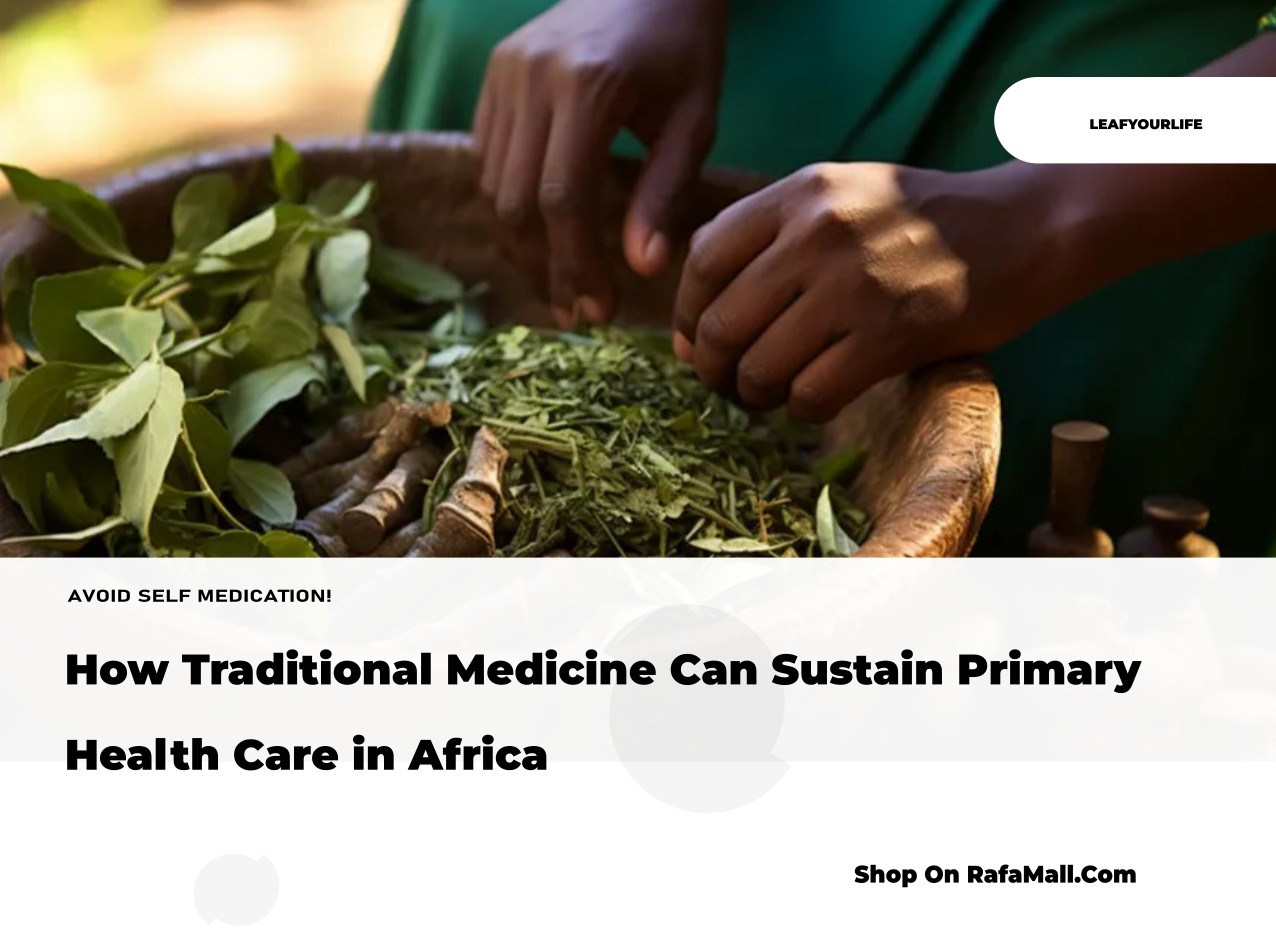
Across Africa, traditional medicine is no longer a footnote to modern healthcare it is, for the majority of the continent's population, the actual front line of care. With formal health systems stretched thin by cost, staffing shortages and distance, traditional medicine offers a
Across Africa, traditional medicine is no longer a footnote to modern healthcare it is, for the majority of the continent's population, the actual front line of care. With formal health systems stretched thin by cost, staffing shortages and distance, traditional medicine offers a route to sustaining primary health care (PHC) that policymakers can no longer afford to sideline.
Across Africa, traditional medicine is no longer a footnote to modern healthcare it is, for the majority of the continent's population, the actual front line of care. With formal health systems stretched thin by cost, staffing shortages and distance, traditional medicine offers a route to sustaining primary health care (PHC) that policymakers can no longer afford to sideline.
A Continent That Already Relies on It
The scale of reliance is striking. WHO's regional office for Africa estimates that 70% to 80% of the region's population has used some form of traditional medicine as primary health care, with herbal treatments the most common form. In Ghana specifically, health officials have noted that the country's traditional health system was long under-resourced relative to the orthodox sector, even though it remains popular with the public. Regional pressures make the case sharper still: presenting at a 2026 WHO regional meeting in Nairobi, one traditional-medicine expert stressed that traditional medicine in Africa is already functioning as de facto primary health care for many communities, with nearly 80 percent of the global population relying on traditional and complementary medicine.
Affordability and Reach Where Formal Systems Fall Short
The appeal is straightforward: cost and proximity. Traditional healers operate in villages and neighborhoods that clinics and hospitals often cannot reach, and their services are typically far cheaper than conventional care. This gap is measurable Ghana’s nurse-to-population ratio stood at roughly 1:600 in 2023, while the doctor-to-population ratio was about 1:4,000, a shortfall that pushes many communities, particularly rural ones, toward traditional practitioners as a first and sometimes only line of care.
Cultural Trust as a Health System Asset
Beyond cost, traditional medicine carries a cultural legitimacy that formal systems sometimes struggle to match. Practitioners speak local languages, understand local beliefs about illness and healing, and are embedded in the communities they serve. This trust is not incidental to health outcomes it shapes whether people seek care at all, and how faithfully they follow it once they do.
Formal Integration Is Already Underway
Several African governments have moved from tolerance to active integration. Ghana's experience is among the most developed on the continent: the country's herbal medicine practice policy dates to 2005, traditional medicine units were introduced into mainstream hospitals from 2011, and the WHO integration strategy followed in 2012. By 2024, the Ministry of Health reported 55 traditional, complementary and integrative medicine (TCIM) services fully integrated into public health facilities nationwide, up from an initial 2017 pilot phase. Regulation runs through the Traditional Medicine Practice Council and the Food and Drugs Authority, both created to license practitioners, register premises and vet products for safety.
Yet integration remains partial. Officials speaking at the ICASA 2025 conference in Accra acknowledged that despite the 55 integrated facilities, Ghana's National Health Insurance Scheme still does not cover prescribed herbal medicines a policy gap that limits how far integration can genuinely expand access for the poorest patients it is meant to serve.
Preventive Care and the Common-Disease Burden
Traditional medicine's emphasis on lifestyle, herbal remedies and long-term wellness dovetails with the founding logic of primary health care itself, which prioritizes prevention over cure. In practice, many traditional remedies are deployed against everyday ailments malaria, digestive complaints, skin conditions, respiratory infections that would otherwise crowd already overburdened clinics. Handled safely, this first line of defence can meaningfully ease pressure on formal facilities.
Jobs, Biodiversity and Local Economies
Traditional medicine is also an economic engine in its own right, sustaining herbalists, traditional birth attendants and a wider supply chain built on local plant resources. Researchers at Ghana's Centre for Plant Medicine Research have flagged a sustainability concern worth noting here: practitioners are harvesting medicinal plants without adequately replanting them, a warning that the same biodiversity underpinning this economy could erode if conservation is not built into the integration agenda.
The Unresolved Challenges
None of this comes without risk. Regulatory capacity remains thin Ghana's own regulator has cited shortages of office space, vehicles and staff for monitoring practitioners, especially in rural areas. Quality control, scientific validation of specific remedies, and the risk of misinformation or harmful practice remain open problems across the region. Training pathways are also limited: in Ghana, KNUST remains effectively the only state institution offering formal training in traditional medicine, prompting calls for other universities to follow suit.
Not a Replacement, But a Cornerstone
Traditional medicine is not positioned to replace conventional healthcare, and no serious health policy in Africa treats it that way. But safely regulated, scientifically validated where possible, and properly resourced, it is already functioning as a cornerstone of primary health care delivery across the continent and African governments pursuing universal health coverage will find it easier to reach that goal working with traditional medicine than around it.
Mustapha Bature Sallama
CEO Hijama Healing Therapy Center.
References
World Health Organization Regional Office for Africa, "Traditional Medicine," WHO/AFRO. https://www.afro.who.int/health-topics/traditional-medicine
Traditional Medicine Practice Council, "Traditional Medicine Practice Council: Its Role and Functions," TMPC Ghana. https://tmpc.gov.gh/traditional-medicine-practice-council-its-role-and-functions-2/
World Health Organization, "View from Ghana: why integration of TCIM with primary health care services is key," WHO, March 22, 2024. https://www.who.int/news-room/feature-stories/detail/view-from-ghana--why-integration-of-tcim-with-primary-health-care-services-is-key
The Star (Kenya), "Traditional medicine gains policy traction as Africa eyes Universal Health Coverage," May 1, 2026. https://www.the-star.co.ke/news/2026-05-01-traditional-medicine-gains-policy-traction-as-africa-eyes-uhc
GhanaWeb, "Traditional medicine key to UHC in Africa - WHO," December 18, 2025. https://www.ghanaweb.com/GhanaHomePage/health/Traditional-medicine-key-to-UHC-in-Africa-WHO-2014367
ModernGhana, "Prospective View for Traditional Medicine Science," Mustapha Bature Sallama. https://www.modernghana.com/news/1424479/prospective-view-for-traditional-medicine-science.html
ModernGhana
Frequently asked questions
How prevalent is traditional medicine in Africa?
The WHO estimates that 70% to 80% of Africa's population has used some form of traditional medicine as primary health care, with herbal treatments being the most common.
Why is traditional medicine crucial for primary healthcare in Africa?
It offers affordable and accessible care in areas where formal health systems are stretched, and benefits from deep cultural trust within communities.
Is traditional medicine integrated into formal healthcare in Ghana?
Yes, Ghana has actively integrated 55 traditional, complementary, and integrative medicine (TCIM) services into public health facilities, regulated by the Traditional Medicine Practice Council and Food and Drugs Authority.
Does Ghana's National Health Insurance Scheme cover traditional herbal medicines?
Currently, Ghana's National Health Insurance Scheme does not cover prescribed herbal medicines, which limits how far integration can expand access for the poorest patients.
What types of ailments does traditional medicine often address?
Traditional remedies are frequently deployed against common ailments such as malaria, digestive complaints, skin conditions, and respiratory infections.
More from the journal
Excessive consumption of processed meat can expose one to cancer – Health expertGhanaians have been cautioned against the excessive consumption of processed meats such as sausages, …Ghana's Green Pharmacy: Unlocking the Healing Power of Our Plants, Safely
Africa is home to roughly a quarter of the world's plant biodiversity, and Ghana, …Natural Medicine Enters the Ghanaian Bar!
Who would ever have imagined that a naturopath—a practitioner of a profession sometimes ridiculed, …