
Integrating Traditional Healers into Ghana's Breast Cancer Response: A Research Proposal
September 18, 2026 · by CEO Rafamall
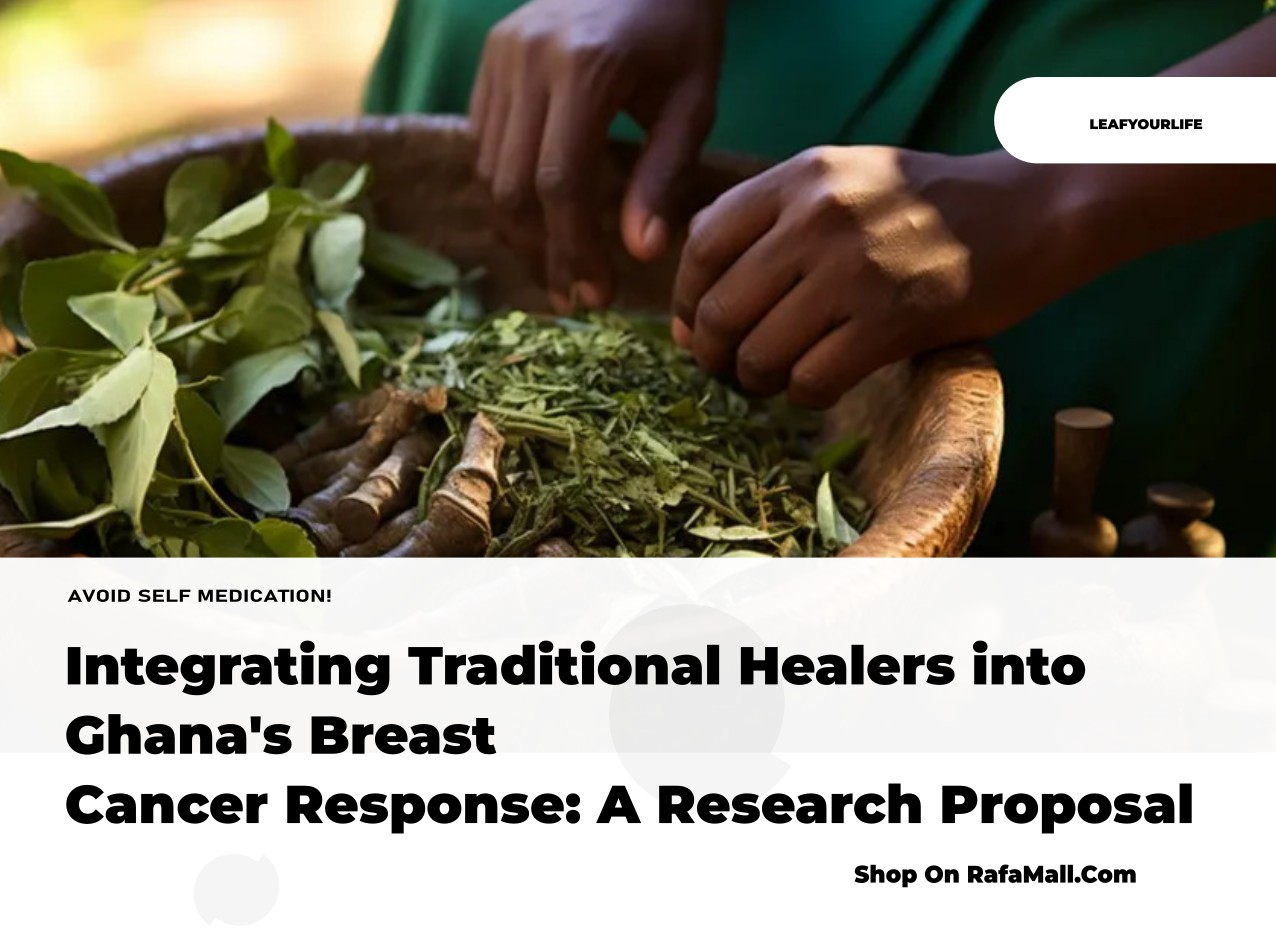
This article discusses a research proposal to integrate traditional healers into Ghana's breast cancer response. In Ghana, over 80% of women are diagnosed with advanced breast cancer, partly due to reliance on traditional medicine. Researchers from KNUST and the University of Florida aim to develop collaborative care pathways to improve early diagnosis and survival rates.
These practitioners use herbal remedies, spiritual healing or other practices rooted in local customs or knowledge passed down through generations. Trusted by their communities, they are accessible, affordable and regarded as more patient-centered than conventional or orthodox healthcare
In Ghana and many African countries, traditional medicine practitioners and faith healers play a prominent role in patient care.
These practitioners use herbal remedies, spiritual healing or other practices rooted in local customs or knowledge passed down through generations. Trusted by their communities, they are accessible, affordable and regarded as more patient-centered than conventional or orthodox healthcare.
But traditional medicine’s popularity runs up against a grim reality: More than 80% of Ghanaian women with breast cancer are not diagnosed until the disease has advanced. By this stage, breast cancer often requires more aggressive treatment, and the chances of a cure or long-term survival are lower. The five-year survival rate among women with breast cancer in Ghana is less than 50%.
Breast cancer is the most common cancer among women in Ghana and a leading cause of cancer-related death. A lack of a national breast cancer screening program likely contributes to delays, but experts believe women’s reliance on traditional medicine — used by more than half of cancer patients with cancer in Ghana — also plays a part.
Researchers at the Kwame Nkrumah University of Science and Technology, or KNUST, in Kumasi, Ghana, and Beth A. Virnig, Ph.D., a professor and dean of the University of Florida College of Public Health and Health Professions, are conducting ongoing studies to understand traditional and faith healers’ influence on breast cancer care in Ghana, with the goal of developing collaborative referral and care pathways between traditional and orthodox healthcare providers.
The team recently published an article in the journal PLOS One on traditional medicine practitioners’ understanding of breast cancer. In interviews with researchers, informally trained traditional practitioners demonstrated knowledge of the common signs of breast cancer consistent with orthodox medical practice, such as lumps or skin or nipple changes. Many said they rely on hospital scans or medical reports to confirm diagnosis.
But their explanations for what causes breast cancer differed from conventional medicine’s understanding, which is that the disease develops from a mix of one’s genes, hormones, lifestyle and environment.
“Most of the traditional medicine practitioners related the disease to a spiritual curse,” said Adwoa Bemah Boamah Mensah, Ph.D., an associate professor and vice dean at KNUST’s School of Nursing and Midwifery. “Once they see it as linked to spirituality, they may not see the need to refer the person for appropriate orthodox care until some months later when the patient’s spiritual healing is complete.”
The team’s previous study found Ghanaian women often do not follow a linear path in their cancer diagnosis and treatment.
“We realized women may use traditional medicine prior to diagnosis or after diagnosis, or sometimes they may start with orthodox care, and then because of cost or side effects, they may abandon the orthodox medicine and seek traditional medicine,” Boamah Mensah said.
While the KNUST-UF research focuses on traditional medicine in Ghana, the use of alternative therapies is hardly unique. A 2023 study conducted at two Utah cancer centers found more than 70% of patients use complementary or alternative medicine as part of their cancer care. The drive to seek care that patients perceive as accessible, holistic or aligned with personal beliefs is very human, Virnig said.
“It’s clear from our research that traditional and faith healers provide a lot more social, religious and spiritual support,” said Virnig, a member of the UF Health Cancer Institute. “I think we need to acknowledge that a lot of orthodox care doesn’t really address people’s psychological or spiritual needs or the emotional toll of disease. If patients are using these treatments, they need to feel they have permission to share that information with their clinicians.”
Traditional medicine is culturally embedded in Ghana, and future efforts to improve breast cancer care must look for ways traditional medicine and orthodox practitioners can work together, the researchers say.
“Traditional medicine is part of our primary healthcare system,” Boamah Mensah said. “Acknowledging traditional medicine’s role in our health structure, we can look at what we can learn from both traditional and orthodox providers so that we can make the detection and treatment journey easier for patients and with better health outcomes.”
https://ufhealth.org/news/2026/researchers-seek-a-role-for-ghanas-traditional-healers-in-breast-cancer-care
Frequently asked questions
Why is integrating traditional healers important for breast cancer care in Ghana?
Traditional healers are trusted, accessible, and affordable in Ghanaian communities, but reliance on them can delay orthodox diagnosis, leading to advanced disease and lower survival rates.
What is the current breast cancer situation in Ghana?
Over 80% of Ghanaian women with breast cancer are diagnosed at an advanced stage, and the five-year survival rate is less than 50%, making it a leading cause of cancer-related death among women.
What are researchers doing to address delays in breast cancer diagnosis in Ghana?
Researchers from KNUST and the University of Florida are studying traditional healers' influence to develop collaborative referral and care pathways between traditional and orthodox healthcare providers.
How do traditional healers' views on breast cancer differ from conventional medicine?
While traditional healers recognize common signs like lumps, many attribute breast cancer's cause to spiritual curses, which can delay referral for orthodox medical treatment.
What benefits do traditional healers offer patients in Ghana?
Traditional and faith healers provide significant social, religious, and spiritual support, addressing psychological and emotional needs often unmet by conventional orthodox care.
More from the journal
Sickle Cell Institute appeals for infrastructure, equipment to expand specialised careThe Institute, which has operated for 52 years, currently runs its Sickle Cell Clinic …WHO warns of rising NCD burden despite longer lives
It recommended eating a balanced diet, engaging in regular physical activity, avoiding tobacco use, …Nyarkotey College Signs Landmark Quality Assurance MoU with India's QAI
The agreement comes as Nyarkotey College expands its international collaborations with institutions in India …