
Scientific research, regulation must guide traditional medicine practice - Dr Ayensu-Danquah
November 19, 2026 · by CEO Rafamall
Ghana is actively working to integrate traditional medicine into its national healthcare system. This involves supporting it with scientific research to validate indigenous knowledge and establishing effective regulatory bodies. The country has trained medical herbalists and integrated herbal medicine units into public hospitals.
“Scientific research should not be seen as a rejection of our indigenous knowledge but as a means of validating and improving it for the benefit of our people,” she said.
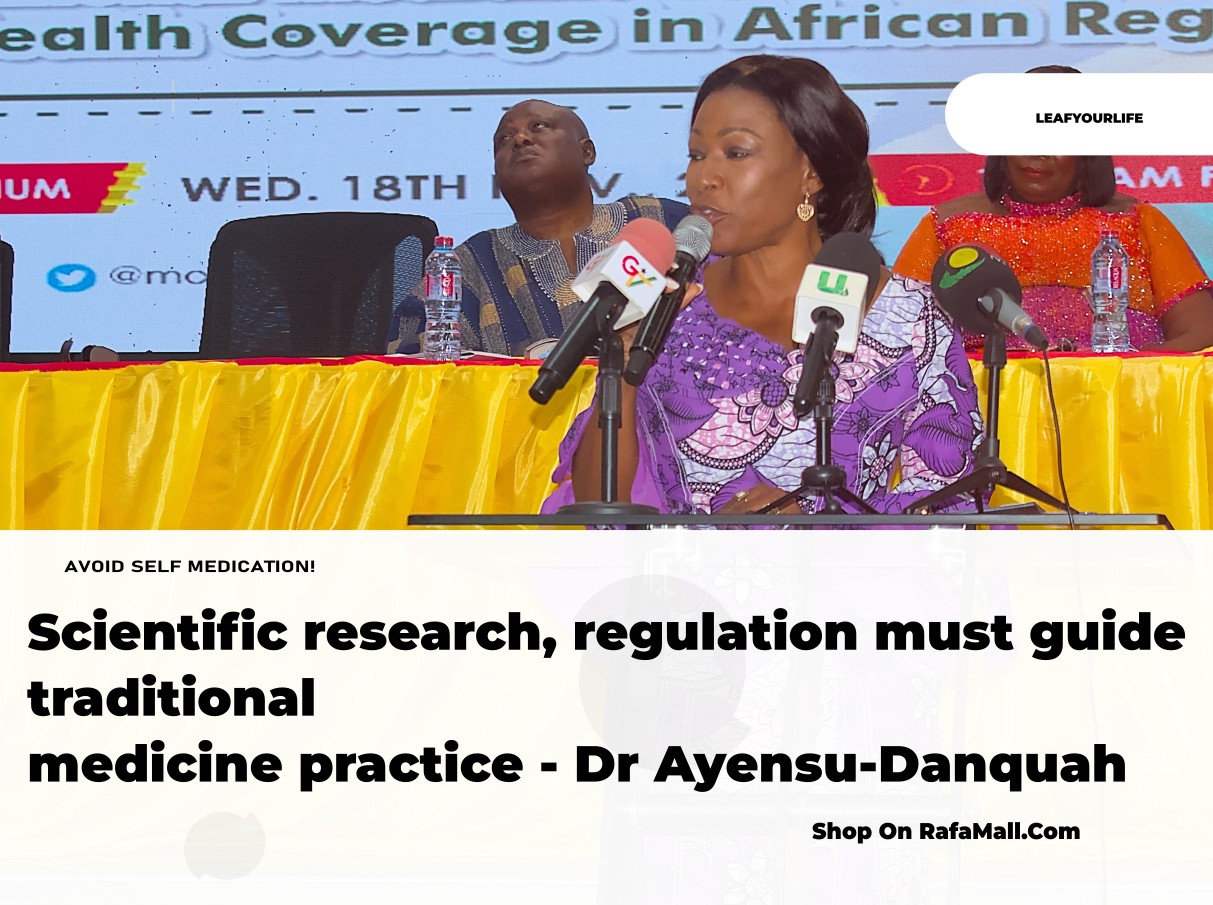
The Deputy Minister of Health, Dr Grace Ayensu-Danquah, has said traditional medicine remains a major source of healthcare, particularly for rural and underserved communities, and must, therefore, be supported with scientific research and effective regulation.
“Scientific research should not be seen as a rejection of our indigenous knowledge but as a means of validating and improving it for the benefit of our people,” she said.
The deputy minister was speaking at the celebration of the 27th Traditional Medicine Week in Ghana, and the commemoration of the 24th African Traditional Medicine Day.
It was on the theme: “Reflection on research and development efforts of traditional medicine towards achieving universal health coverage in the African Region.”
Regulation
Dr Ayensu-Danquah said the country had made progress through the establishment of the Traditional and Alternative Medicine Directorate and the Traditional Medicine Practice Council to regulate practitioners and promote ethical standards.
She said the country had also trained about 600 medical herbalists through the herbal medicine programme at the Kwame Nkrumah University of Science and Technology (KNUST), while herbal medicine units had been integrated into 55 public hospitals.
A Professor of Pharmacognosy and Head of the Department of Pharmacognosy at KNUST, Isaac Kingsley Amponsah, said Africa could not achieve UHC by 2030 without integrating traditional medicine into healthcare delivery.
“Traditional medicine remains one of the healthcare resources consistently available and accessible in rural communities where access to conventional healthcare is limited,” he said, adding that COVID-19 pandemic had demonstrated the importance of traditional medicine, particularly during disruptions to global medical supply chains.
“Integration without research is a gamble with human lives. We must establish the safety and efficacy of these products before making them part of our healthcare system,” Prof. Amponsah said.
He called for a dedicated fund for research into conditions such as malaria, hypertension, diabetes and sickle cell disease.
Prof. Amponsah also urged the media to demand verified licences and product registration before advertising herbal practitioners and their products.
Collaboration
The President of the Ghana Federation of Traditional Medicine, Samuel Ato Duncan, called for more collaboration among government, researchers, regulators and practitioners to advance the sector.
“Institutions must be strengthened to outlast individuals, while research and regulation must work together to translate scientific findings into practical healthcare solutions,” he said.
The president proposed expanding herbal medicine units to at least 100 locations and securing National Health Insurance Scheme coverage for recommended herbal healthcare services based on evidence of their cost and effectiveness.
He also called for the publication of the reviewed medicinal plant monograph, protection of intellectual property rights and improved investment in clinical research and local production.
A former Director of the Traditional and Alternative Medicine Directorate, Dr Anastasia Yirenkyi, was honoured in recognition of her hard work and service to the development of traditional medicine in the country.
Frequently asked questions
How is Ghana regulating traditional medicine?
Ghana regulates traditional medicine through the Traditional and Alternative Medicine Directorate and the Traditional Medicine Practice Council, which promote ethical standards and oversee practitioners.
How many medical herbalists has Ghana trained?
Ghana has trained approximately 600 medical herbalists through the herbal medicine program at the Kwame Nkrumah University of Science and Technology (KNUST).
Are herbal medicine units available in Ghanaian hospitals?
Yes, herbal medicine units have been integrated into 55 public hospitals across Ghana.
Why is research important for traditional medicine in Ghana?
Research is essential to validate indigenous knowledge, ensure the safety and efficacy of traditional medicine products, and improve practices for public benefit.
More from the journal
Health Ministry, WHO, and GHAFTRAM Converge in Accra for 27th Traditional Medicine Week CelebrationThe Ministry of Health, in collaboration with the World Health Organization (WHO) and the …WHO sounds the alarm on antimicrobial resistance threat
The spread of antimicrobial resistance (AMR) is threatening modern medicine despite progress in combating …From Digestion to Heart Health: 8 benefits of eating dawadawa
Dawadawa, also known as African locust bean, is a popular traditional condiment in West …