
TMPC PR Unit Rebuts Unsubstantiated Claims About Herbal Medicine
November 11, 2026 · by CEO Rafamall
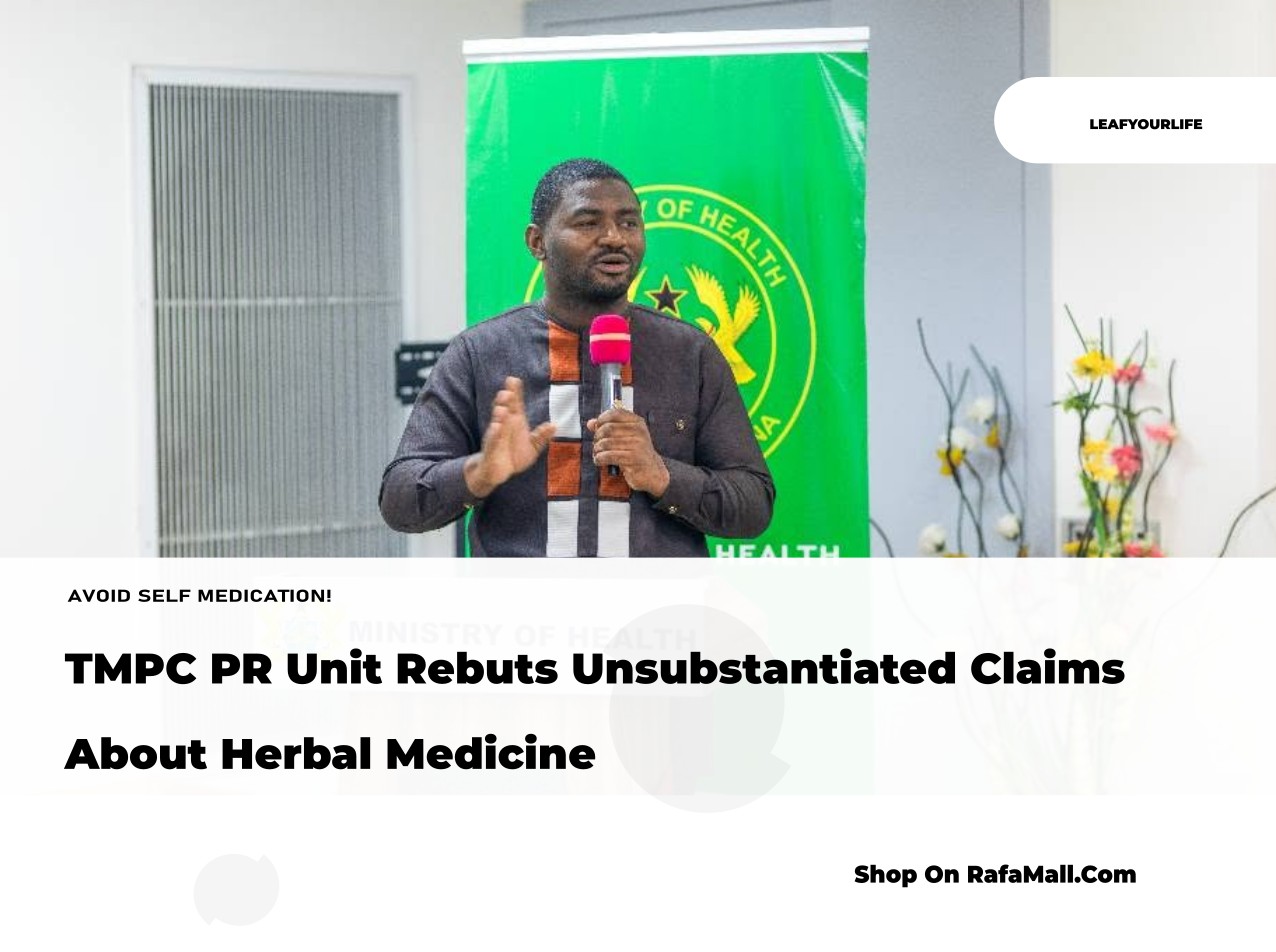
The Public Relations Unit of the Traditional Medicine Practice Council (TMPC) wishes to draw public attention to the official position of the Council’s Governing Board regarding recent public statements questioning the safety and efficacy of herbal medicines in Ghana.The developm
The development follows remarks made by Dr. Sompa Otabi-Nelson, Founder and Chief Executive Officer of Dinah-Gayle Medical Clinic, during a televised discussion on GHOne TV, in which she reportedly attributed more than 40 per cent of kidney disease cases among patients receiving dialysis in Ghana to the use of herbal medicine.
The Public Relations Unit of the Traditional Medicine Practice Council (TMPC) wishes to draw public attention to the official position of the Council’s Governing Board regarding recent public statements questioning the safety and efficacy of herbal medicines in Ghana.
The development follows remarks made by Dr. Sompa Otabi-Nelson, Founder and Chief Executive Officer of Dinah-Gayle Medical Clinic, during a televised discussion on GHOne TV, in which she reportedly attributed more than 40 per cent of kidney disease cases among patients receiving dialysis in Ghana to the use of herbal medicine.
In an official press statement issued on 30 October 2026, the Governing Board expressed concern over the assertion, describing it as a sweeping claim that requires credible scientific evidence and factual substantiation. The Board cautioned that such generalisations could create misconceptions about the traditional and alternative medicine sector and undermine public confidence in regulated herbal medicinal products.
TMPC Reaffirms Its Commitment To Safe And Regulated Herbal Medicine
The Governing Board reaffirmed that herbal medicines registered by the Food and Drugs Authority (FDA) of Ghana undergo regulatory evaluation and are required to satisfy applicable safety, quality and efficacy standards.
The Board also highlighted Ghana’s longstanding commitment to developing the traditional medicine sector through research, education and institutional support. These efforts include the establishment of the Centre for Plant Medicine Research (CPMR) at Mampong-Akuapem in 1975, the establishment of the Traditional and Alternative Medicine Directorate at the Ministry of Health, and the integration of Herbal Medicine Units into public health facilities across the country.
Additionally, Ghana has established formal academic training pathways for herbal medicine practitioners at institutions including the Kwame Nkrumah University of Science and Technology (KNUST) and Pentecost University. These programmes equip practitioners with relevant knowledge in medical sciences, pharmacology, toxicology, and clinical care.
The Council, established under the Traditional Medicine Practice Act, 2000 (Act 575), remains committed to ensuring that practitioners operate within the prescribed regulatory and professional standards.
Promoting Responsible And Evidence-Based Healthcare
The Board acknowledged the importance of public education on the appropriate use of medicines, including herbal preparations. However, it emphasised that all forms of healthcare must be accessed responsibly and supported by credible evidence.
It further cautioned against claims of absolute cures for chronic non-communicable diseases such as hypertension, diabetes and heart disease, which require appropriate long-term management, lifestyle modifications and adherence to prescribed treatment.
The Board also maintained that blanket assertions about the ineffectiveness of herbal medicines are inappropriate, particularly in view of research conducted on selected FDA-approved Ghanaian herbal products.
In line with the World Health Organization’s Traditional Medicine Strategy (2025–2034), the Council supports the responsible integration and rational use of traditional medicine alongside other recognised healthcare systems.
A Call For Collaboration And Public Responsibility
The Governing Board has called for constructive collaboration between orthodox and traditional medicine practitioners, noting that both sectors serve the same population and share the responsibility of promoting public health.
The Council also urges healthcare professionals, media organisations and all stakeholders involved in public health communication to ensure that statements concerning traditional and herbal medicine are guided by credible scientific research, verifiable facts and responsible professional conduct.
Members of the public are encouraged to:
- Seek healthcare services from duly licensed practitioners, both orthodox and traditional.
- Use only FDA-approved herbal medicinal products.
- Disclose all medicines and herbal preparations they are taking to their healthcare providers to minimise possible drug interactions.
- Avoid self-medication and patronising unlicensed herbal medicine vendors.
TMPC Reaffirms Its Regulatory Mandate
The Traditional Medicine Practice Council reiterates its commitment to protecting public health through effective regulation, practitioner training, research and public education.
The Council remains open to constructive engagement with healthcare professionals, researchers, the media and other stakeholders to promote accurate public understanding of traditional and alternative medicine in Ghana.
The Public Relations Unit wishes to emphasise that the Council’s position is not to encourage indiscriminate use of herbal preparations, but to promote safe, regulated, evidence-informed and responsible traditional medicine practice.
The TMPC calls for mutual respect, professional collaboration and responsible public discourse in advancing a credible, safe and integrated healthcare system for Ghana.
FLORENCE EXORNAM AGBITSU
PUBLIC RELATIONS UNIT
TMPC
Frequently asked questions
What is the TMPC's stance on herbal medicine safety in Ghana?
The TMPC reaffirms that herbal medicines registered by the FDA of Ghana undergo regulatory evaluation to meet safety, quality, and efficacy standards.
Are herbal medicines in Ghana regulated?
Yes, herbal medicines registered by the Food and Drugs Authority (FDA) of Ghana are regulated and must satisfy applicable safety, quality, and efficacy standards.
What institutions support traditional medicine in Ghana?
Ghana supports traditional medicine through institutions like the Centre for Plant Medicine Research (CPMR), the Traditional and Alternative Medicine Directorate, and academic programs at KNUST and Pentecost University.
Can herbal medicines cure chronic diseases?
The TMPC cautions against claims of absolute cures for chronic non-communicable diseases, emphasizing that they require long-term management and lifestyle modifications.
How should the public access healthcare services?
The public is encouraged to seek healthcare services from duly licensed practitioners, both orthodox and traditional, and to rely on credible scientific research.
More from the journal
How freezing bread before eating could benefit your healthFreezing freshly purchased bread before eating it could help reduce the rise in blood …Herbal Medicine and Kidney Disease in Ghana: What the Evidence Really Says
According to news reports of a 1 November 2026 appearance on GHOne TV’s Toast …African medicinal plant offers breakthrough in fight against sickle cell disease
Cissus populnea have been widely utilised across Nigeria, Ghana, and neighbouring countries as natural …