
WHO Chief Explains How Traditional Medicine Can Earn Global Trust
October 19, 2026 · by CEO Rafamall
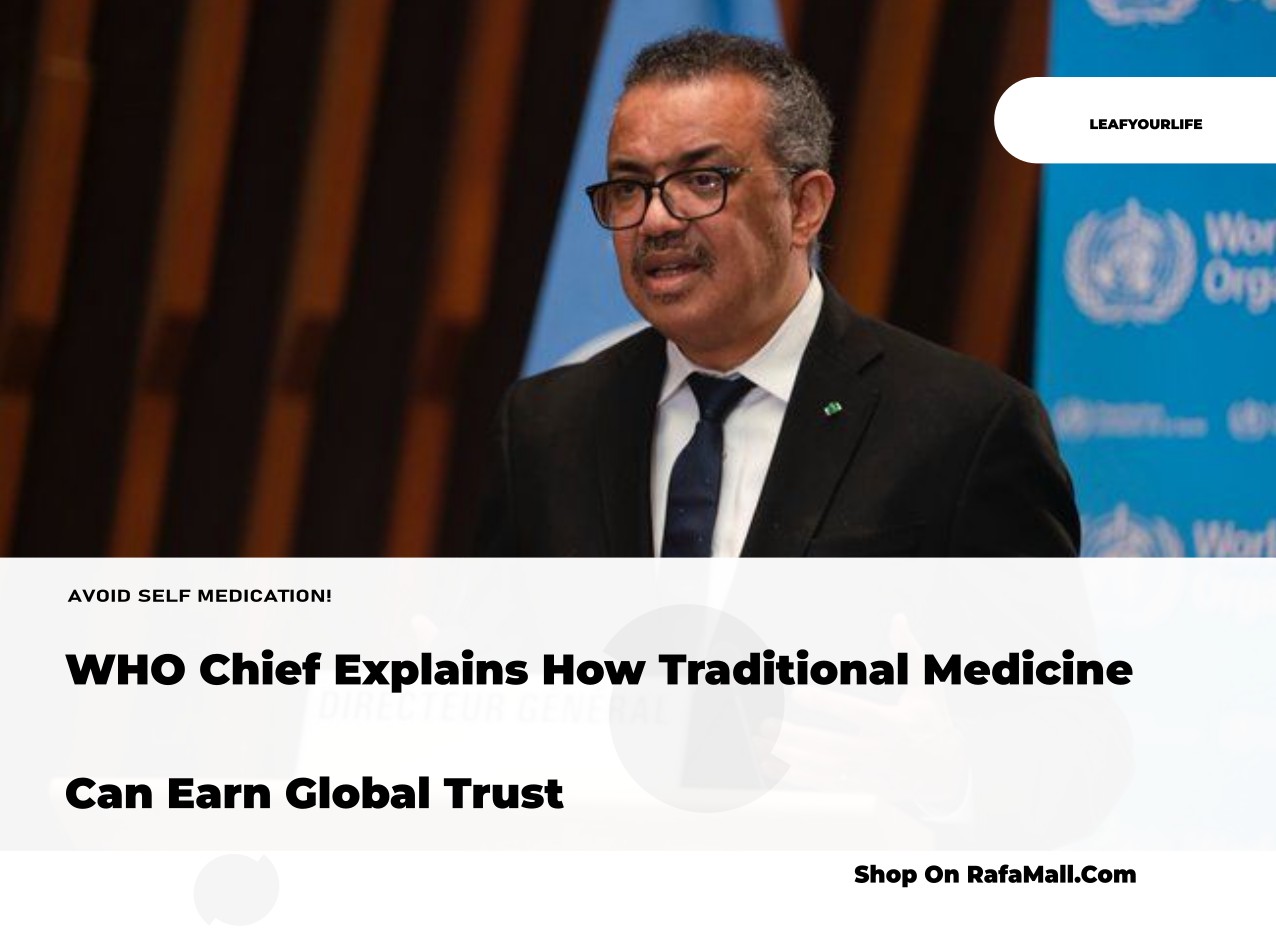
The WHO Director-General, Dr. Tedros Adhanom Ghebreyesus, advocates for combining traditional medicine with scientific research. This approach aims to establish safety and effectiveness while respecting cultural heritage. He emphasizes the need for stronger standards, research, and protection of traditional knowledge to integrate these practices into health systems.
According to him, traditional medicine is an important source of healthcare for billions of people, serving not only as a trusted form of treatment but also as part of their cultural heritage.
Director-General of the World Health Organization (WHO), Dr Tedros Adhanom Ghebreyesus, has stressed the need to combine traditional medicine with scientific research to establish its safety and effectiveness.
According to him, traditional medicine is an important source of healthcare for billions of people, serving not only as a trusted form of treatment but also as part of their cultural heritage.
In a message shared on his X page on October 17, 2026, Dr Ghebreyesus said efforts to promote traditional medicine should respect long-standing cultural practices while ensuring that treatments meet established standards of safety and effectiveness.
“Our task is to respect that heritage while ensuring that health interventions are safe, effective and based on the best available evidence,” he said.
He further noted that traditional medicine and modern science should not be treated as opposing approaches, arguing that research, innovation, regulation and quality assurance could help bring the two together.
Accra Reset’ calls for country-led global health policies – Health Minister
According to him, more research is needed to establish which traditional treatments work, who benefits from them and the conditions under which they are effective.
He also called for stronger standards to protect the public from unsafe products and misleading claims about the benefits of traditional remedies.
Dr Ghebreyesus said the protection of traditional knowledge was equally important, particularly the contributions of indigenous peoples and local communities who had preserved such practices over generations.
He said these communities should share fairly in the benefits arising from innovations based on their knowledge.
“When supported by evidence and integrated appropriately into health systems, traditional medicine can contribute to stronger primary health care and progress towards universal health coverage,” he said.
The WHO, he added, remained committed to supporting member states through its Global Centre for Traditional Medicine and collaboration with researchers, practitioners and communities around the world.
See the video below:
Frequently asked questions
What is the WHO's stance on traditional medicine?
The WHO advocates for integrating traditional medicine with scientific research to ensure its safety and effectiveness, while respecting cultural heritage.
Why does the WHO emphasize research for traditional medicine?
Research is crucial to establish which traditional treatments work, who benefits, and under what conditions they are effective, ensuring public safety and trust.
How does the WHO view traditional medicine and modern science?
The WHO believes traditional medicine and modern science should not be opposing approaches, but rather integrated through research, innovation, regulation, and quality assurance.
What role do indigenous communities play in traditional medicine, according to the WHO?
Indigenous peoples and local communities are vital for preserving traditional knowledge, and the WHO stresses the importance of protecting this knowledge and ensuring fair benefit-sharing from innovations.
More from the journal
Excessive consumption of processed meat can expose one to cancer – Health expertGhanaians have been cautioned against the excessive consumption of processed meats such as sausages, …Ghana's Green Pharmacy: Unlocking the Healing Power of Our Plants, Safely
Africa is home to roughly a quarter of the world's plant biodiversity, and Ghana, …Natural Medicine Enters the Ghanaian Bar!
Who would ever have imagined that a naturopath—a practitioner of a profession sometimes ridiculed, …