
TMPC Registrar Calls for Evidence-Based Practice at GAMH 2026 Annual General Conference
July 31, 2026 · by CEO Rafamall
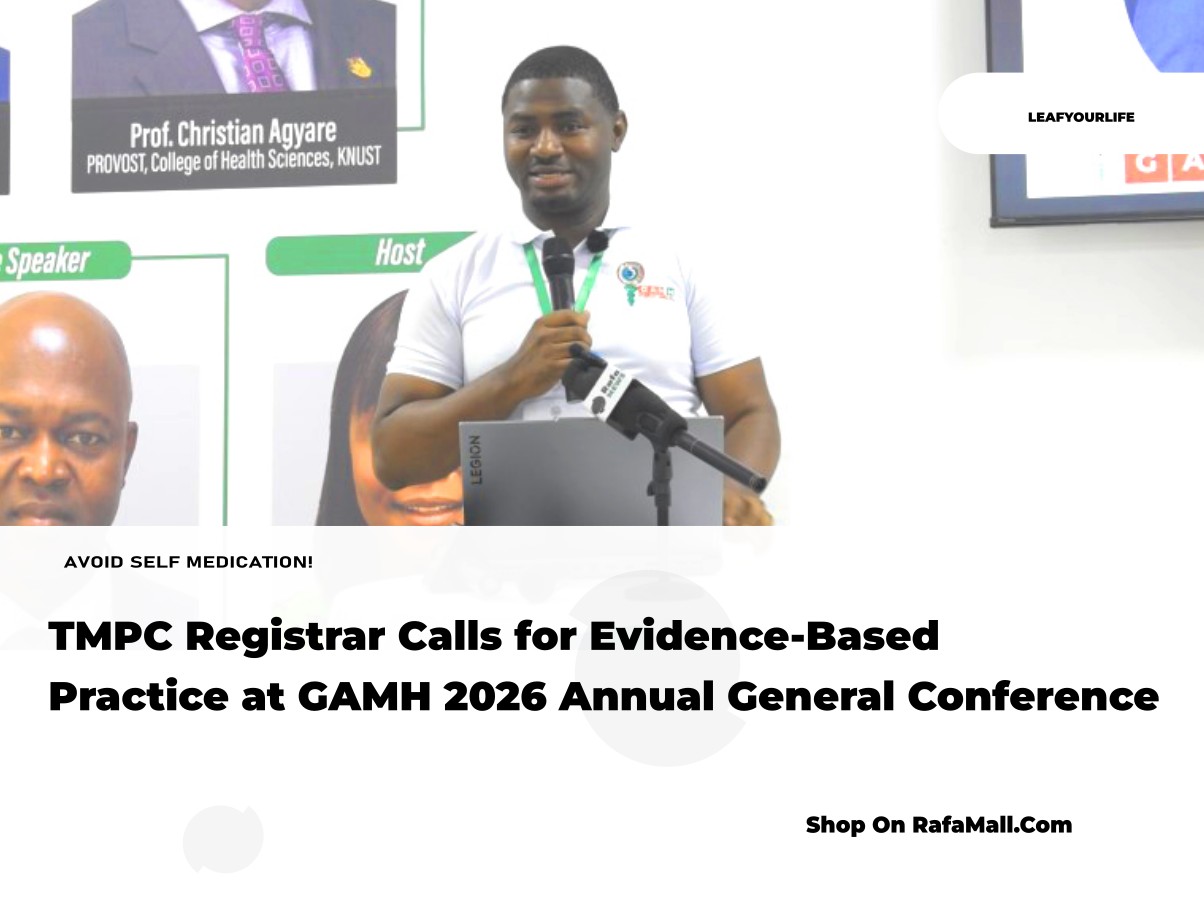
The Registrar of the Traditional Medicine Practice Council (TMPC), Dr. Yakubu Yusuf Tobor, has called on medical herbalists to embrace scientific research, evidence-based practice, and professional excellence as the foundation for the growth and global recognition of traditional
Delivering the keynote address, Dr. Tubor described the conference as a significant moment for the profession, noting that the gathering provided a platform for reflection, renewal, and recommitment to the values that define medical herbalism.
The Registrar of the Traditional Medicine Practice Council (TMPC), Dr. Yakubu Yusuf Tobor, has called on medical herbalists to embrace scientific research, evidence-based practice, and professional excellence as the foundation for the growth and global recognition of traditional medicine in Ghana.
Dr. Tubor made the call at the 2026 Annual General Conference of the Ghana Association of Medical Herbalists (GAMH) , held at the Kwame Nkrumah University of Science and Technology (KNUST).
Delivering the keynote address, Dr. Tobor described the conference as a significant moment for the profession, noting that the gathering provided a platform for reflection, renewal, and recommitment to the values that define medical herbalism.
He acknowledged that 2026 marks 25 years since the passage of Act 575, which formally established the Traditional Medicine Practice Council and laid the foundation for the structured regulation of traditional medicine in Ghana. He also noted that KNUST's Department of Herbal Medicine is celebrating its 25th anniversary this year — a milestone that reflects the growth and maturity of the profession.
"Twenty-five years ago, Ghana took a bold decision to properly regulate traditional medicine in our country. Today, we celebrate not just the years, but the journey — a quarter-century of structured, evidence-informed growth of this profession," he said.
Traditional Medicine: A Global and Local Reality
Dr. Tubor highlighted the growing global recognition of traditional medicine, noting that the World Health Organization (WHO) has adopted a traditional medicine strategy running through 2034, placing evidence, quality, and safety at its core.
"Globally, the traditional medicine market is valued at over 250 billion USD, growing at nearly 80% annually, and is projected to reach 10 billion by 2037," he revealed.
In Ghana, he emphasized, approximately 70% of the population — over 20 million Ghanaians — rely on traditional medicine for their primary healthcare needs.
"This is our role. This is the answer this conference seeks to address," he said.
Research: The Heart of the Profession
In a direct and passionate address to medical herbalists, Dr. Tobor stressed the urgent need for scientific research, pharmacological studies, toxicology data, and clinical evaluations to validate herbal medicines.
"Herbal medicines that are properly researched do not stay in traditional spaces — they find their way into hospitals," he said, citing examples of herbal products like Sisun (used by nephrologists for nephrolithiasis) and Pilex (prescribed for hemorrhoids), both of which have roots in traditional medicine.
"Yet we don't do research. This is where our medical herbalists must venture into the research space and make this happen. Defend your profession — not with defensiveness, but with quality, science, and excellence," he urged.
"There are still those who question the legitimacy of our medicine. Our answer is not argumentative. Our answer is an impeccable record — patients safely treated, papers published, and practices that run through the highest professional standards."
Institutional Collaboration and Reform
Dr. Tobor announced that TMPC is in the process of updating its regulatory Act to address gaps identified over the past 25 years, improving digitization, and strengthening collaboration with key institutions including the Center for Plant Medicine Research, the Food and Drugs Authority (FDA), and the Ghana Health Service.
He also revealed ongoing engagements with the Indian and Chinese Embassies to learn from their advanced traditional medicine integration programs, and partnerships with institutions to leverage technology for the advancement of traditional medicine in Ghana.
"We are not sitting in Accra looking down. We are here, in person, at your conference, because we believe in what is being built here today," he affirmed.
The Future Is a Plan
Dr. Tobor concluded with a powerful vision: "Traditional, complementary, and integrated medicine is the future of medicine."
"The future is not a dream. It is a plan. And today, on this historic conference, we recommit to it together — academics, regulators, policy makers, and medical herbalists — in every district of this country."
He called on the Ghana Association of Medical Herbalists to continue using the annual conference as a platform for reflection, renewal, and recommitment to the values that define the profession.
Frequently asked questions
What is the Traditional Medicine Practice Council (TMPC)?
The TMPC is the regulatory body for traditional medicine in Ghana, established by Act 575 to oversee and structure the practice of traditional medicine in the country.
Why is evidence-based practice important for traditional medicine in Ghana?
Evidence-based practice, including scientific research and clinical evaluations, is crucial for validating herbal medicines, ensuring their safety and efficacy, and achieving global recognition and integration into mainstream healthcare.
How many Ghanaians rely on traditional medicine for healthcare?
Approximately 70% of Ghana's population, which is over 20 million people, relies on traditional medicine for their primary healthcare needs.
What is the global market value of traditional medicine?
The global traditional medicine market is valued at over $250 billion USD, growing at nearly 80% annually, and is projected to reach $10 billion by 2037.
What initiatives is TMPC undertaking to advance traditional medicine?
TMPC is updating its regulatory Act, improving digitization, strengthening collaborations with institutions like the FDA and Ghana Health Service, and engaging with Indian and Chinese Embassies to learn from their advanced traditional medicine integration programs.
More from the journal
WHO Chief Explains How Traditional Medicine Can Earn Global TrustAccording to him, traditional medicine is an important source of healthcare for billions of …Excessive consumption of processed meat can expose one to cancer – Health expert
Ghanaians have been cautioned against the excessive consumption of processed meats such as sausages, …Ghana's Green Pharmacy: Unlocking the Healing Power of Our Plants, Safely
Africa is home to roughly a quarter of the world's plant biodiversity, and Ghana, …