
Late-night eating linked to higher rates of fatty liver disease and cirrhosis
October 13, 2026 · by CEO Rafamall
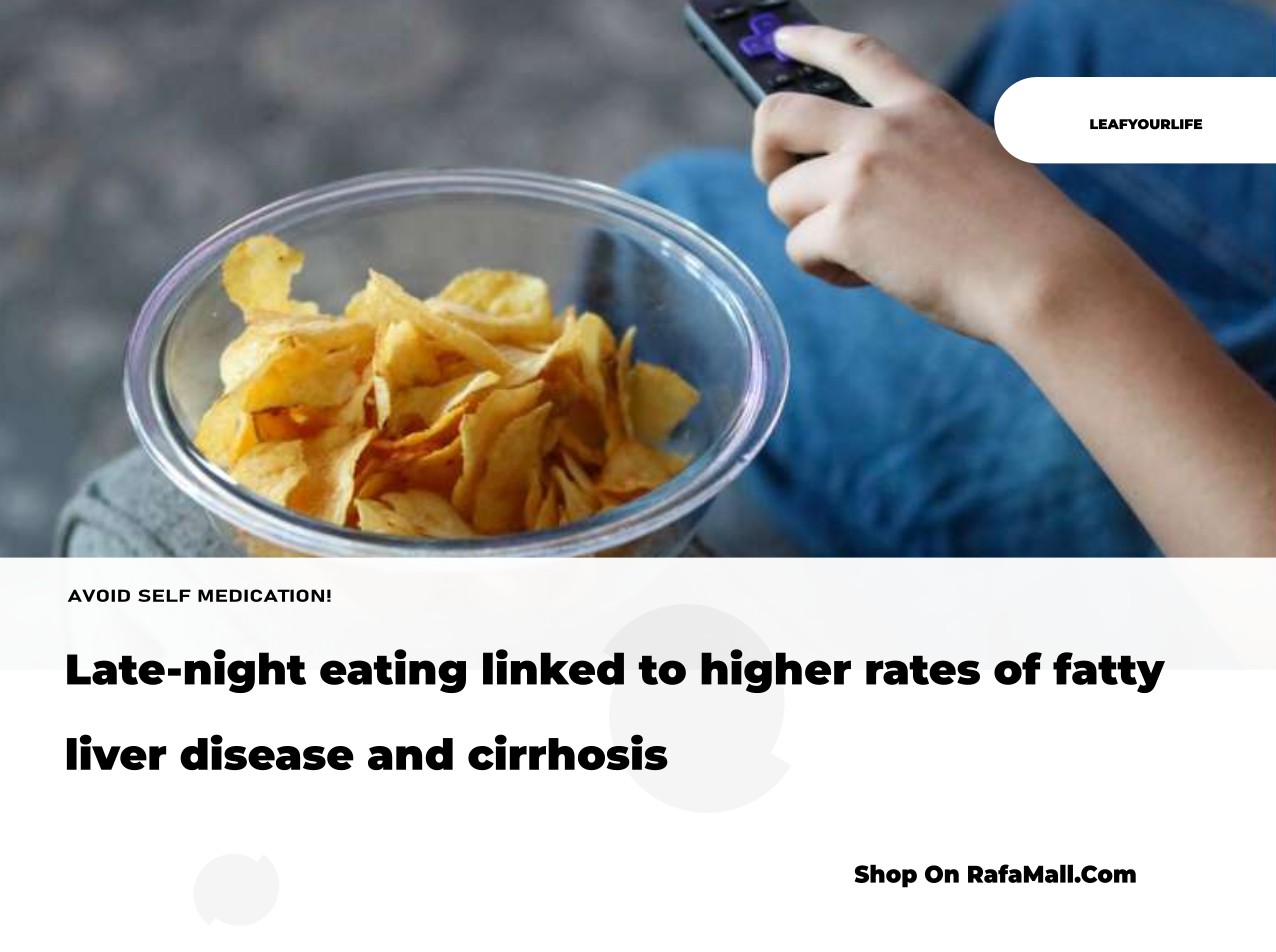
New research led by Oregon Health & Science University suggests you should think twice about indulging in a late-night snack if you'd like to preserve liver health.The study, published in the journal Clinical Gastroenterology and Hepatology, documents a correlation between la
Our findings add to the growing body of literature linking late-evening eating patterns to adverse metabolic and liver outcomes," the authors write
New research led by Oregon Health & Science University suggests you should think twice about indulging in a late-night snack if you'd like to preserve liver health.
The study, published in the journal Clinical Gastroenterology and Hepatology, documents a correlation between late-night eating—defined as eating after dinner or after bedtime—and a heightened risk of two types of liver disease: metabolic dysfunction-associated steatotic liver disease and cirrhosis.
Previous research has associated late-night snacking with heart disease and obesity, but in the new study, researchers set out to look for a link between late-night eating and liver disease.
"A few studies have hinted at this idea but this is among the first long-term analyses to explicitly draw the connection to fatty liver disease," said lead author Robert Wilechansky, a hepatologist at OHSU who specializes in liver transplantation.
Wilechansky noted that night shift workers grapple with misalignment of the body's natural day-night cycle, with elevated rates of obesity and heart disease. With as much as 30% of the U.S. population affected by fatty liver disease, he wondered whether small changes in meal timing might make a difference.
"We know the liver is very much in tune with the body's circadian rhythms," he said. "So we're interested in changing the timing of eating in a way that could make a difference in health without changing the composition of what people eat."
Researchers analyzed three large, preexisting nationwide data sets: the Nurses' Health Study, the Nurses' Health Study II and the Health Professionals Follow-up Study. They extracted self-reported diet and lifestyle habits from almost 200,000 participants across all three studies, grouped participants by eating behaviors and then looked for correlations with reported fatty liver disease or cirrhosis.
They found a 20% to 30% increase in all forms of liver disease among people who reported late-night eating compared with those who did not.
"It's important to remember, of the people who developed fatty liver disease, only a small fraction develop serious forms of the condition like liver cirrhosis," Wilechansky said. "Even so, the big takeaway here is that confining your calorie intake to several hours before bedtime might be beneficial."
New clinical study
A co-author who studies circadian rhythms said the new study builds on previous research revealing the importance of the body clock to overall health.
"We are seeing over and over again that the timing of behaviors, whether it's sleep, eating or exercise, really matters," said co-author Andrew McHill, an associate professor and sleep and circadian physiologist at OHSU. "For example, we have shown that eating during the night, when the internal biological clock is promoting sleep, reduces the ability of your body to metabolize foods as efficiently and can eventually lead to obesity, diabetes and now poor liver health."
He noted that previous research in animal models reveals the liver to be one of the organs most susceptible to misalignment in timing between eating and sleep.
Wilechansky cautions that the study is observational and based on broadly defined, self-reported data, but it does provide a starting point for more research.
To that end, he is part of a team at OHSU recruiting for a study that will monitor eating behaviors directly and see whether eating earlier improves clinical measures of underlying fatty liver disease. The new study provides a starting point to put the findings to the test.
"Our findings add to the growing body of literature linking late-evening eating patterns to adverse metabolic and liver outcomes," the authors write.
In addition to Wilechansky and McHill, co-authors include Kevin Casey, Andrew Chan and Tracey Simon of Massachusetts General Hospital in Boston.
MedicalXpress.com
More from the journal
FDA, Northern Ghana Healers Partner to Raise Standards; Healers Seek FundingAs part of efforts to enhance public health, safety and regulatory compliance, the Food …Same calories, different responses: Food processing influences metabolism and brain activity
The ultraprocessed meal also contained more additives, and while the study did measure total …Sickle Cell Institute appeals for infrastructure, equipment to expand specialised care
The Institute, which has operated for 52 years, currently runs its Sickle Cell Clinic …