
Study reveals how manufacturing methods affect herbal medicine potency
July 7, 2026 · by CEO Rafamall
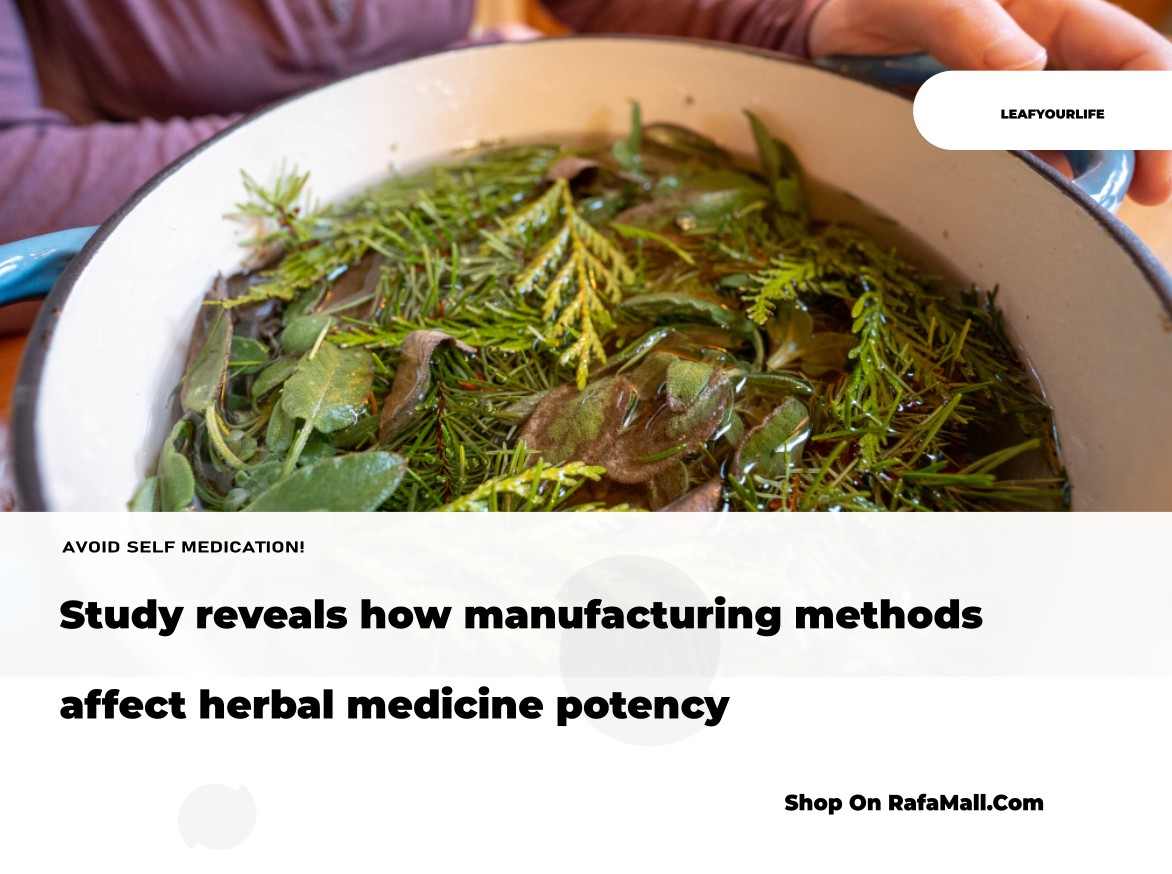
A recent study investigated how manufacturing methods influence the potency of herbal medicines. Researchers found that traditional water decoction preserved active plant microRNAs like MIR2911, while modern ethanol-based processing significantly reduced them. This suggests that processing choices are crucial for maintaining the full functional state of botanical products.
"Some botanical medicines may contain not only chemical actives, but also information-bearing biological components whose fate depends on manufacturing," the authors write
In a study published in Signal Transduction and Targeted Therapy, the researchers used MIR2911, a plant microRNA enriched in honeysuckle, as a proof-of-concept example. They found that traditional water decoction preserved MIR2911 and its antiviral activity, whereas ethanol-based processing, widely used in modern manufacturing, removed most of this RNA and sharply reduced the associated bioactivity.
For decades, the active ingredients of herbal medicines have been discussed mainly in terms of small molecules such as flavonoids, alkaloids and terpenoids. Nucleic acids received little attention because they were long assumed to be too unstable to survive boiling, digestion and absorption. This study challenges that assumption from a manufacturing perspective, asking what happens to a functional plant RNA during real-world sourcing, drying, extraction and sterilization.
The team first established a recovery-corrected quantification system to measure MIR2911 more accurately across complex samples. They found that MIR2911 was most abundant in unopened flower buds, varied across production regions, and was preserved much better by oven drying than by air drying, with about a 3.2-fold difference.
The largest effect came from extraction. When the researchers simulated a commonly used ethanol-based workflow, MIR2911 levels in the retained preparation fell by 93.6% compared with the original aqueous decoction. Several marketed honeysuckle-containing products processed through similar routes also contained little or no detectable MIR2911. Functionally, RNA isolated from traditional decoction suppressed Japanese encephalitis virus (JEV) replication in cultured cells, whereas RNA isolated from ethanol-processed materials and commercial products showed little or no comparable antiviral effect.
The researchers also examined how MIR2911 works. They showed that MIR2911 directly targets multiple regions of the JEV genome and requires AGO2, a core component of the canonical microRNA silencing pathway, to exert its antiviral effect. When AGO2 was deleted, MIR2911 no longer suppressed viral replication; when AGO2 was restored, the antiviral effect returned.
To test whether orally administered honeysuckle decoction could generate biologically active circulating RNA in humans, the team isolated serum exosomes from healthy volunteers after intake of the decoction. These exosomes suppressed JEV replication in cell experiments, supporting the idea that MIR2911 can remain functionally relevant after oral delivery under defined conditions.
The study also identified a practical manufacturing variable. High-temperature moist-heat sterilization substantially degraded MIR2911, but adjusting the decoction to a mildly acidic pH before sterilization markedly improved RNA stability. According to the authors, this suggests that process parameters such as pH control may help preserve RNA-based activity during production.
The researchers say the work does not imply that all botanical medicines depend on RNA, nor that MIR2911 should be treated as a universal marker. Instead, it establishes a tractable example of how processing conditions can shape RNA abundance, stability, bioavailability and function-and why quality systems built only around chemical markers may not fully capture the functional state of a botanical product.
"Some botanical medicines may contain not only chemical actives, but also information-bearing biological components whose fate depends on manufacturing," the authors write. "A process may preserve one layer of activity while unintentionally removing another."
Lei, J., et al. (2026) Extracellular RNA dimension in alternative medicine: processing–dependent integrity and bioactivity of honeysuckle miRNA MIR2911. Signal Transduction and Targeted Therapy. DOI: 10.1038/s41392-026-02831-0. https://www.nature.com/articles/s41392-026-02831-0
Frequently asked questions
What did the study reveal about herbal medicine manufacturing?
The study found that manufacturing methods, such as extraction and drying, significantly impact the preservation of active biological components like plant microRNAs in herbal medicines.
How do traditional vs. modern processing methods compare?
Traditional water decoction was shown to preserve plant microRNAs (e.g., MIR2911 in honeysuckle) and their associated bioactivity better than modern ethanol-based processing.
Why is this study important for herbal product quality?
It highlights that quality systems focused solely on chemical markers may not fully capture the functional state of a botanical product, emphasizing the role of biological components.
What specific factors were found to affect RNA stability?
Oven drying preserved RNA better than air drying, and adjusting decoction pH to mildly acidic before sterilization markedly improved RNA stability.
More from the journal
Ghana's Green Pharmacy: Unlocking the Healing Power of Our Plants, SafelyAfrica is home to roughly a quarter of the world's plant biodiversity, and Ghana, …Natural Medicine Enters the Ghanaian Bar!
Who would ever have imagined that a naturopath—a practitioner of a profession sometimes ridiculed, …Late-night eating linked to higher rates of fatty liver disease and cirrhosis
Our findings add to the growing body of literature linking late-evening eating patterns to …