

A plant long cherished in South African traditional medicine is now at the forefront of groundbreaking research, potentially revolutionising cancer treatments both locally and internationally. Researchers at North-West University (NWU) are studying the anti-cancer properties of Lessertia frutescens, commonly known as “cancer bush”, as preliminary lab results unveil its potential against various cancer types, including the notoriously hard-to-treat small-cell lung cancer and colorectal cancer.
Prof. Chrisna Gouws, a research professor in the Centre of Excellence for Pharmaceutical Sciences, leads the team exploring this promising avenue. “Lessertia frutescens has shown significant anticancer activity against several different cancer types in our research,” she said, highlighting the initial success of the extracts tested on cultured human cancer cells and advanced laboratory-grown models known as spheroids.
The relevance of their findings deepened as the researchers observed the plant’s activity against cancers that typically evade conventional treatments. “What is very interesting and exciting is the apparent activity in drug-resistant cancers such as resistant small-cell lung cancer where known chemotherapies have limited to no activity,” Prof. Gouws, an authority in her field, leading strategic projects for human-based methodologies in biomedical research, reported. This discovery opens new pathways for treatment options targeting cancers long feared as incurable.
Another notable aspect of Lessertia frutescens is its long-standing history of traditional usage and its safety profile. “An important consideration is that this plant has a long history of use and is considered non-toxic and safe for use,” Prof. Gouws, who has made significant advances in understanding human health through cell culture models, added. This attribute is crucial, as the anticancer effects of this plant come without the debilitating side-effects frequently associated with standard chemotherapy regimens.
Beyond its potential to combat cancer, this indigenous plant may offer broader health benefits. “Lessertia has known boosting effects for the digestive and immune systems, and it can have mood-enhancing activities as well,” Prof. Gouws explained. “It may therefore not only target the cancer, but positively impact the patient as a whole at the same time.”
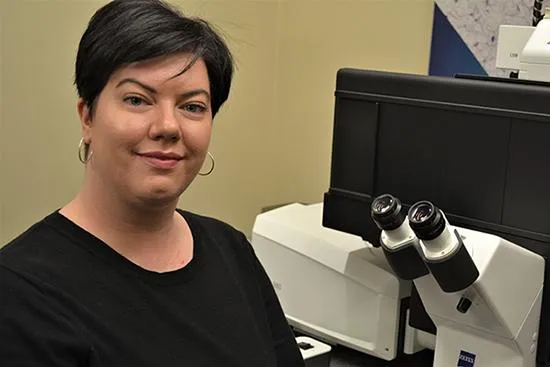
Prof. Chrisna Gouws, a research professor at North-West University, is leading a team studying Lessertia frutescens’ anticancer properties.
The research team is delving into the phytochemicals present in the plant to identify the specific molecules responsible for its anticancer activity. “Although many molecules have been identified and shown to contribute to the anticancer activity of the plant, the mechanism of action remains mostly unclear,” Prof. Gouws, who is committed to leveraging traditional remedies for cancer treatment, noted. The next phase will involve animal model testing later this year to verify both the safety and efficacy of these compounds ahead of potential clinical trials.
In exciting developments, researchers are working towards creating a complementary medicine product that could be available in pharmacies by 2027. Prof. Gouws highlighted the socio-economic impact of the project, noting that “chemotherapy can be very expensive and inaccessible in rural areas. A new plant-based treatment will be much more cost-effective and may be more accessible because it can be manufactured locally.” Moreover, increased demand for the plant material is expected to create economic opportunities for local farmers.
iol.co.za


