
Natural Medicine Enters the Ghanaian Bar!
October 14, 2026 · by CEO Rafamall
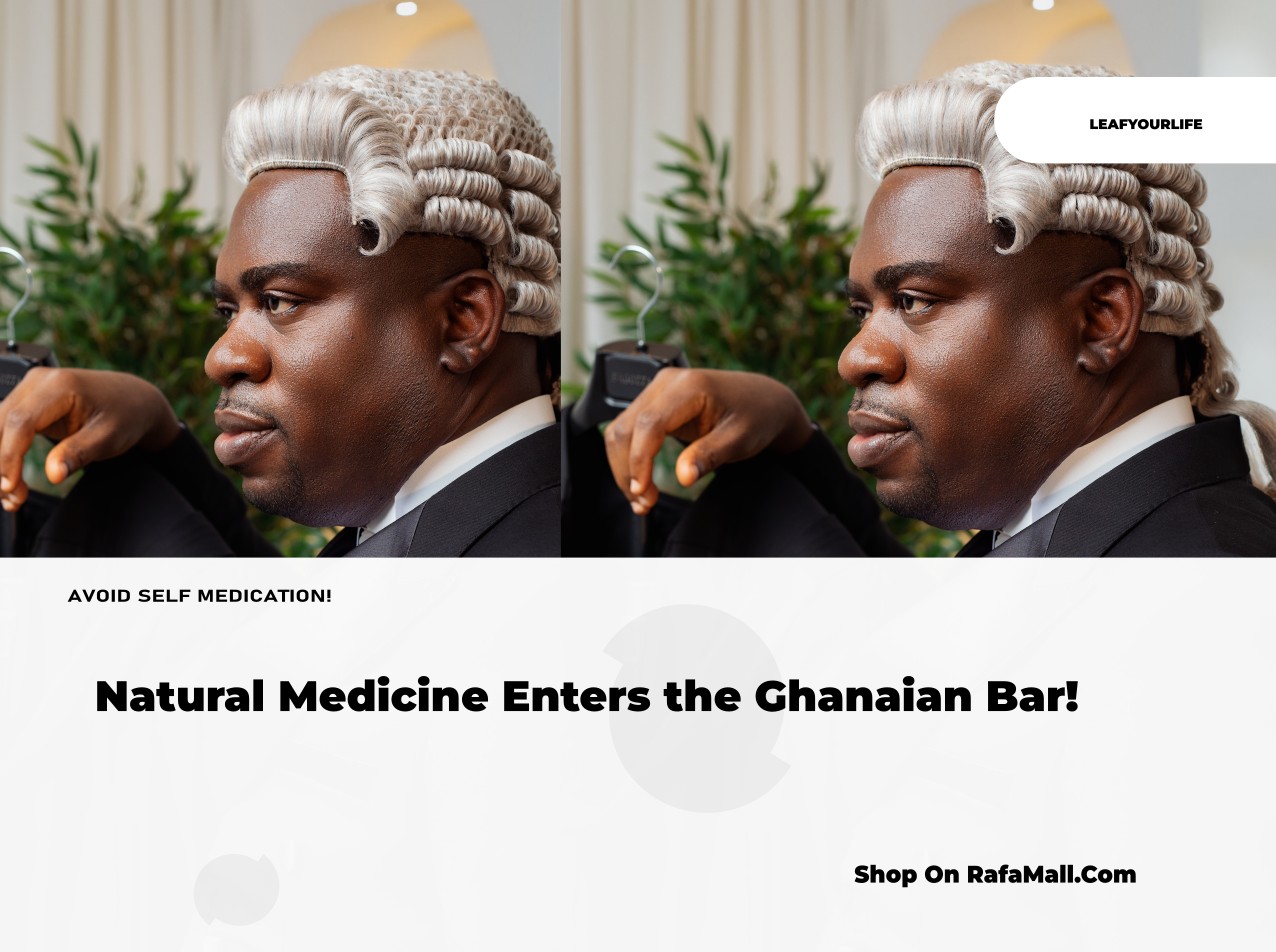
Who would ever have imagined that a naturopath—a practitioner of a profession sometimes ridiculed, underestimated and treated as inferior within Ghana’s healthcare system—would one day wear the lawyer’s wig and gown and enter the Ghanaian Bar? Charlie, the story has changed!On Oc
Who would ever have imagined that a naturopath—a practitioner of a profession sometimes ridiculed, underestimated and treated as inferior within Ghana’s healthcare system—would one day wear the lawyer’s wig and gown and enter the Ghanaian Bar? Charlie, the story has changed!
Who would ever have imagined that a naturopath—a practitioner of a profession sometimes ridiculed, underestimated and treated as inferior within Ghana’s healthcare system—would one day wear the lawyer’s wig and gown and enter the Ghanaian Bar? Charlie, the story has changed!
On October 9, 2026, I was called to the Ghana Bar, following my call to the Bar in The Gambia in November 2024. This is more than a personal achievement. It represents a new chapter in the struggle for recognition, justice and dignity for natural medicine practitioners in Ghana and Africa.
Beyond medical stereotypes
For decades, practitioners of naturopathy, homeopathy, Ayurveda, chiropractic, acupuncture and other complementary and alternative medicine (CAM) disciplines have battled stereotypes. Some are dismissed without regard to their education, research or clinical training. Too often, they have lacked influential voices to articulate their concerns within healthcare institutions and policy discussions.
Who says a naturopath cannot also become a professor, researcher or lawyer? The law is not the exclusive preserve of any single profession. Natural medicine practitioners can acquire the intellectual and professional tools needed to participate in shaping the laws that affect them.
Regulatory uncertainty and the courts
The challenges are real: disputed regulatory authority, threats of enforcement, reputational harm and uncertainty over professional qualifications, institutional accreditation, clinical training and licensing. Ghana’s Traditional Medicine Practice Act, 2000 (Act 575), principally regulates traditional medicine; its application to distinct CAM disciplines remains contested. Students and institutions deserve clearer rules before making costly educational investments.
The Traditional and Alternative Medicine Bill, under development since 2014 and subsequently revised, has not yet delivered the comprehensive framework practitioners seek. These uncertainties have generated litigation. In the case brought by the Ghana Alternative Medical Practitioners Association against the Traditional Medicine Practice Council, the Accra High Court, on May 29, 2026, dismissed an application to strike out the action. That procedural decision allowed serious questions to be heard; it was not a final judgment determining the Council’s powers.
The lesson is unmistakable: alongside healthcare knowledge, practitioners need legal literacy, effective representation and the confidence to seek lawful remedies.
India offers a lesson
Consider India. Ayurveda, Yoga and Naturopathy, Unani, Siddha and Homeopathy are part of its AYUSH framework, supported by dedicated institutions and defined educational and regulatory arrangements. The National Commission for Indian System of Medicine Act, 2020 strengthened governance of specified Indian systems of medicine.
India’s Ministry of AYUSH has reported industry estimates rising from US$2.85 billion in 2014–2015 to US$18.1 billion in 2020–2021. These figures describe estimated industry size—not government revenue—but show the possibilities created by investment and structured development.
India has also advanced AYUSH insurance coverage. Under 2024 insurance rules and guidance, insurers must establish policies for AYUSH treatments on a comparable footing with other treatments, although actual benefits depend on policy terms. More remarkably, specifically qualified postgraduate Ayurvedic practitioners in Shalya Tantra and Shalakya Tantra may perform 58 specified surgical procedures after prescribed training. This does not authorise every Ayurvedic practitioner to undertake surgery. It demonstrates how regulation can define specialised responsibilities and protect patients.
Ghana need not copy India wholesale. We should learn how clear scopes of practice, research, safeguards, health insurance pathways and educational standards can turn a neglected field into an accountable contributor to healthcare and enterprise.
Government must act
The National Democratic Congress’s 2024 manifesto promised to develop herbal, traditional and alternative medicine through research, investment, partnerships and the integration of research-backed practices. President John Dramani Mahama’s government now has an opportunity to translate those commitments into practical reforms.
I urge the Ministry of Health to revive comprehensive legislation, settle regulatory boundaries, clarify professional and training standards, and consider evidence-based insurance inclusion. Public safety, scientific scrutiny and respect for legitimate professional practice must advance together. Government should know that practitioners who are also lawyers are ready to assist with legislative drafting, consultation and implementation.
A new legal frontier
Imagine a Ghanaian law firm specialising in traditional, complementary and alternative medicine (TCAM): professional licensing, healthcare litigation, educational accreditation, medicinal products, intellectual property, insurance and cross-border healthcare agreements. This is a promising niche for lawyers, not only those who practise natural medicine.
My ambition is to mentor more naturopaths and other natural medicine practitioners to pursue further education, including law, and to enter the Bar. We must produce professionals who can build institutions, defend lawful practice and contribute intelligently to public policy—not fight conventional medicine.
To those who once regarded natural medicine practitioners as underdogs, the message is simple: we are no longer merely asking who will speak for us. We are educating ourselves to speak with the authority of the law.
Charlie, natural medicine has entered the Ghanaian Bar. And this is only the beginning.
The author is a dual-qualified lawyer (Ghana and The Gambia); Visiting Professor of Naturopathy and Director of African Programmes in Traditional, Complementary and Integrative Medicine at Lincoln University College, Malaysia; Founding President of the African Naturopathic Federation; and founder of the India–Africa AYUSH Centre for Education, Research and Regulatory Cooperation. Email: collegeofholisticmedicine@gmail.com
More from the journal
Late-night eating linked to higher rates of fatty liver disease and cirrhosisOur findings add to the growing body of literature linking late-evening eating patterns to …FDA, Northern Ghana Healers Partner to Raise Standards; Healers Seek Funding
As part of efforts to enhance public health, safety and regulatory compliance, the Food …Same calories, different responses: Food processing influences metabolism and brain activity
The ultraprocessed meal also contained more additives, and while the study did measure total …